


 Previous Article
A UK Buyer's Guide to Decking Board Lengths (2026)
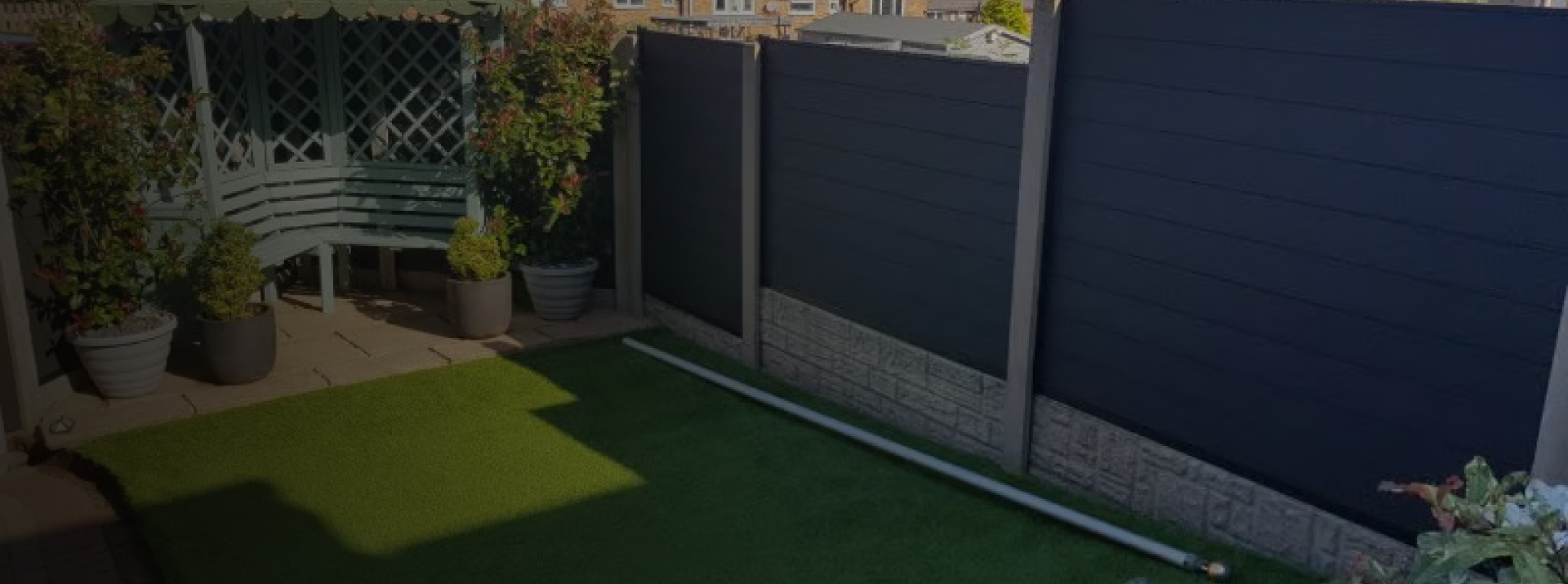
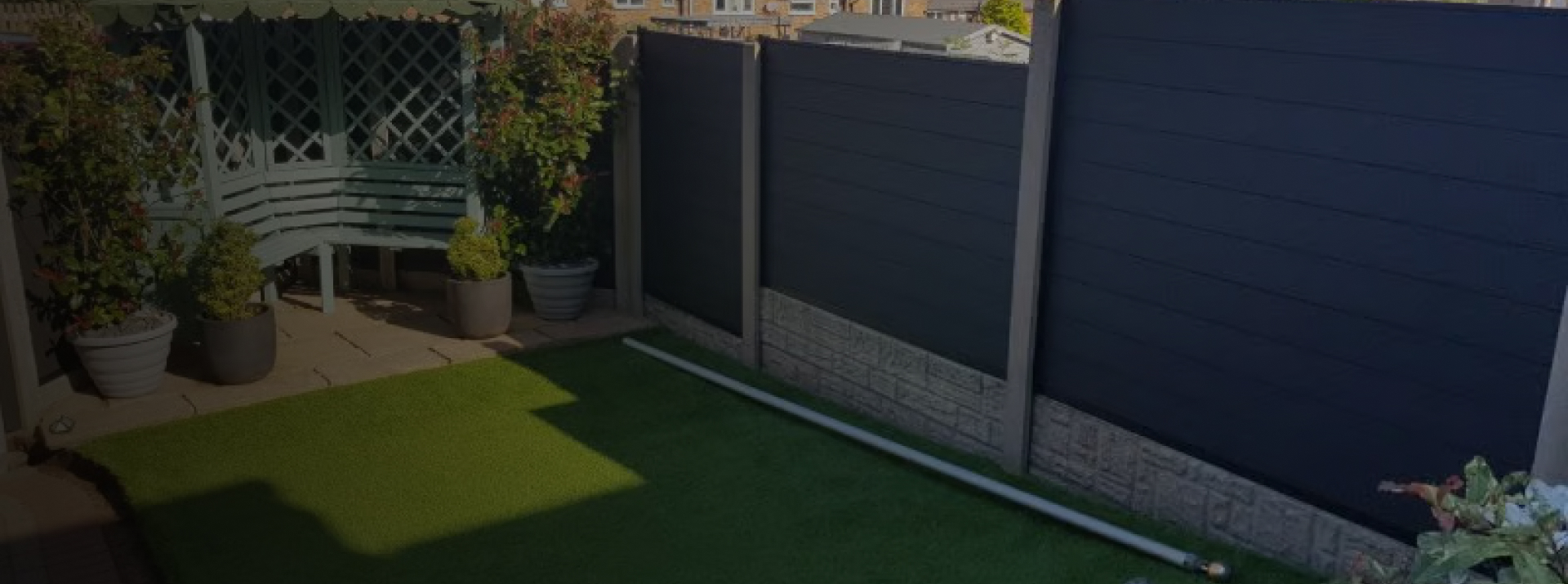
Composite fencing is fast growing in popularity with homeowners here in the UK, and for good reason. It’s a modern enhancement to traditional timber fence panels, offering huge benefits and advantages that are seen as an investment that pays you back over time.
Of course, personal preference always plays a part. If you’ve just come across composite fencing, you may be asking: “Why should I choose this over traditional wood?”
You’re in the right place. Let’s compare some of the pros and cons of composite fencing on the key factors—from maintenance and durability to the true long-term cost—to give you the information you need to make the right decision.
| Feature | Wood Fencing | Composite Fencing |
|---|---|---|

|

|

|
| Maintenance | High (Annual sealing & painting) | Very Low (Simple cleaning only) |
| Average Lifespan | 10-15 Years | 20-30+ Years |
| Long-Term Cost | Becomes more expensive over time | Higher initial cost, but cheaper long-term |
| Look & Feel | Classic, rustic look | Modern, premium, and customisable |
| Winner | Best for very low budgets or short-term needs. | Best for long-term value, performance, and looks. |
Any outdoor product needs maintaining against the elements, but the key question is: to what level?
| Material | Maintenance Level |
|---|---|
| Wood | High Maintenance: Requires annual sealing and regular painting/staining to prevent rot. |
Composite Fencing

|
Low: Requires simple cleaning only. No painting or sealing is ever needed. |
The issues with timber fencing are well known. To make it last, it needs constant maintenance. As a general rule, a timber fence needs to be sealed once a year and painted every 3-5 years to retain its strength and visual appeal.
Composite fencing, on the other hand, is extremely moisture-resistant. It doesn’t require the regular painting, staining or sealing associated with timber, and its simple cleaning and maintenance requirements are one of its biggest advantages for homeowners.
| Material | Strength (Year 1) | Strength (Year 10+) |
|---|---|---|
| Wood | Good | Poor (Significantly weakens over time) |
| Composite Fencing | Excellent | Excellent (Maintains most of its original strength) |
When it comes to durability, composite again outperforms wood. The real test comes over time. If you gave a wooden fence the same low level of maintenance as a composite one, the difference would become clear in as little as 5 years.
This is key to longevity. Many wooden fences fail not only due to cracking, rotting, and splintering but also due to high winds over the years. In fact, storm damage is one of the number one reasons customers look to upgrade or replace their fencing. But how does the new upgrade compare?
| Material | Wind Resistance Performance |
|---|---|
| Wood | Poor: Lightweight and rigid. Prone to snapping, shattering, or "blowing out" of posts during high winds. |
| Composite Fencing | Excellent: High density and engineered flexural strength allow it to absorb wind load without breaking. |
Like anything, a lot of suppliers mention “strength,” but few explain how and why. Composite fencing is an investment, so let’s explain exactly why it lasts longer in relation to wind. It all comes down to Flexural Bending Strength.
We already know the increased advantages composite decking has over wood regarding flexural strength—we have tested it for years. The same engineering applies to fencing.
| Feature | Standard Timber Panel (Lap) | Composite Fence Board |
|---|---|---|
| Material Thickness | 5mm - 10mm (Thin Slats) | 18mm - 21mm (High Density) |
| Wind Resistance | Moderate (Risk of snapping in storms) | Excellent (Structural Stability) |
⚠️ Expert Tip: Check the Specs Composite doesn’t just outperform wood on day one; it continues to do so because of its low moisture absorption.
Crucial Check: When buying a fencing kit, always check the board thickness is at least 20mm. Many suppliers sell cheaper alternatives by reducing the thickness (e.g. to 15mm), which significantly reduces the board’s strength and wind resistance.
Composite outperforms wood in two key areas. Firstly, the shorter lifespan of wood leads to more waste. Secondly, the chemicals used in pressure-treated timber make it difficult to recycle.
| Materials | Environmental Impact |
|---|---|
| Wood | Often chemically treated; shorter lifespan leads to more waste. |
|
Composite Fencing
|
Gives new life to up to 90% recycled materials; long lifespan reduces waste. |
Composite fencing has a much longer lifespan and has a huge positive impact by reducing the amount of plastic waste that would normally end up in landfill.
While traditional timber has a classic appeal, it can be rustic and raw in appearance. Modern composite panels are continually being improved.
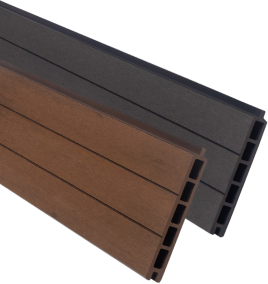
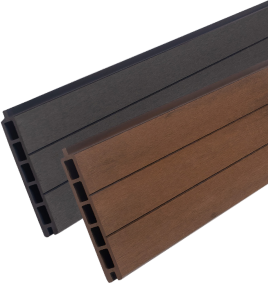
Innovations like our natural slatted fence panels now capture the unique wood grain patterns seen in premium timber, with mixed tones offering a growing choice of sophisticated composite fencing colours and versatile fencing design ideas to suit any modern garden. For the first time, composite technology can bring the authenticity of natural hardwood into a fence panel, while also offering clean, contemporary designs.
| Materials | Natural Appearance |
|---|---|
| Wood | Good Appearance: A classic, natural look. |
|
Composite Fencing
|
Natural Appearance: Can provide a highly realistic hardwood appearance, or a clean, modern look. |
Colour stability is a critical factor in the long-lasting visual appeal of your garden design.
Wood can experience significant colour change as it weathers, often developing a silvery-grey appearance over time. Composite fencing behaves differently. Uncapped boards can experience natural colour fading as the exposed wood fibres weather, while capped fence panels have an additional protective surface designed to provide greater resistance to UV exposure and colour change.
| Materials | Fading |
|---|---|
| Wood | Aggressive Fading: Quickly weathers and turns a dull, silvery-grey. |
|
Composite Fencing
|
Enhanced Stability: Capped boards have minimal fade; uncapped boards lighten but retain their base colour. |
Composite fencing is an investment, so let’s look at the total cost of ownership. When comparing composite fencing costs with timber, the initial purchase price is only one part of the calculation. For this example, we’ll look at replacing 10 fence panels in a garden with existing concrete posts.
Key takeaway: While wood has a lower initial cost, the ongoing maintenance costs in both time and materials mean that composite becomes the more cost-effective option over the long term.
Assumptions used:
Key Takeaway on Labour: We have calculated composite installation as £0 (DIY) because the boards are lightweight and designed to simply slide into existing posts. In contrast, traditional timber panels are heavy and cumbersome, typically requiring two people or professional labour to install safely.
Now, let’s review the total cost for installing different types of our composite fencing.
| Cost Over Time | Wood Fencing | Uncapped Composite Fencing |
|---|---|---|
| Initial Cost (Materials + Labour) | £520 | £1,200 |
| Est. Total Cost After 5 Years | £520 + £252 (maintenance) = £772 | £1,200 + £80 (cleaning) = £1,280 |
| Est. Total Cost After 10 Years | £772 + £336 (maintenance) = £1,108 | £1,280 + £80 (cleaning) = £1,360 |
| Est. Total Cost After 15 Years | £1,108 + £84 (maintenance) + £520 (replacement) = £1,712 | £1,360 + £80 (cleaning) = £1,440 |
The break-even point occurs around year 12-13. After this, and especially after factoring in the cost of replacing the timber fence, composite fencing delivers a clear return on investment.
Composite fencing does have a higher upfront cost, but when you review all the key points, it comes out on top. It offers a consistent, modern garden look that elevates your home’s kerb appeal, helping to increase your property value with composite fencing—meaning the investment pays you back over time not just in appearance, but in your pocket, too.

As the founder and CEO of Ultra Decking®, Allan Jeffrey is a recognised expert and leading innovator in the field of wood-plastic composites, backed by a successful business career spanning over 40 years. His foundation in engineering (BSc. Hons) is the driving force behind the company’s commitment to technical excellence and ground-breaking product development.
Through premier brands like Ultra Decking® and the pioneering BioSyn™, Allan’s vision is to supply discerning clients with luxurious, sustainable building materials that perfectly match their lifestyles and values.
 Previous Article
A UK Buyer's Guide to Decking Board Lengths (2026)

Does Composite Decking Add Value to a UK Home? A 2026 ROI Guide
