


Guide to Composite Fencing Colours: Trends, Pairings, and What to Expect
- March 25 2026
- Allan Jeffrey
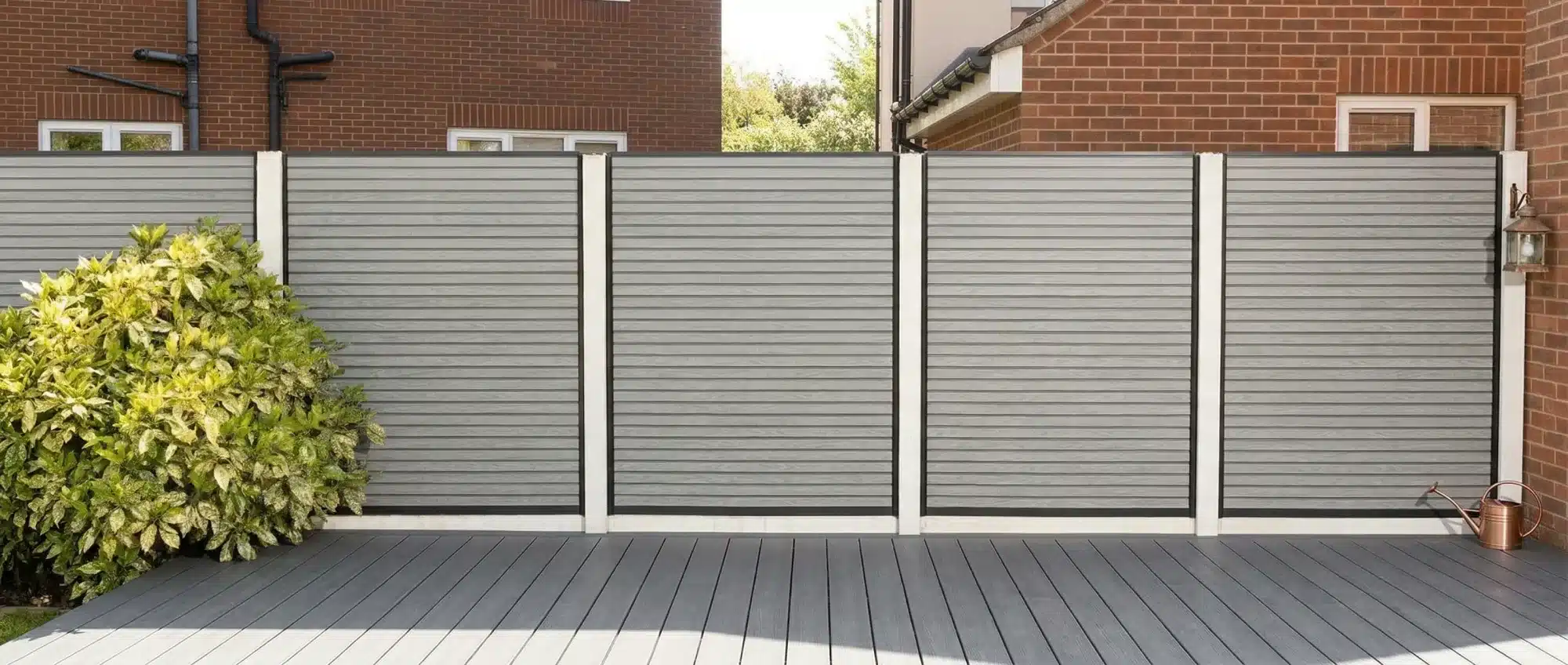
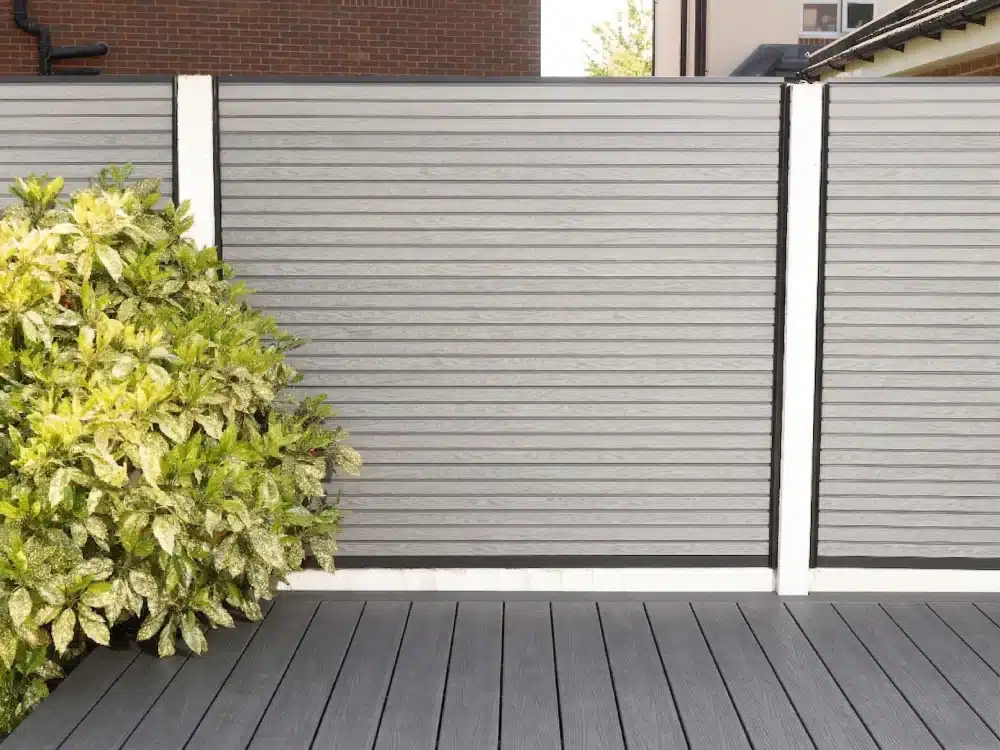

When designing or simply upgrading your garden landscape, your perimeter fence acts as the border and the base where your design either starts or adds the final finishing touches. The right colours, styles, and designs can enhance the space, make an area look bigger, or seamlessly blend with other features. You can use it as a striking contrast or the perfect backdrop setting.
Choosing the right fencing colour goes beyond just aesthetics. It impacts everything from the perceived size of your garden to the physical performance of the boards against the UK weather.
To understand in more detail how colour can blend, contrast, or enhance your space, we will explore the most widely available colours in modern composite fencing. We won’t just look at the design trends, but exactly what you can expect from the colour after installation, too.
Grey shades have long dominated the market, and for good reason. They offer a cool, contemporary aesthetic that instantly modernises any garden project.
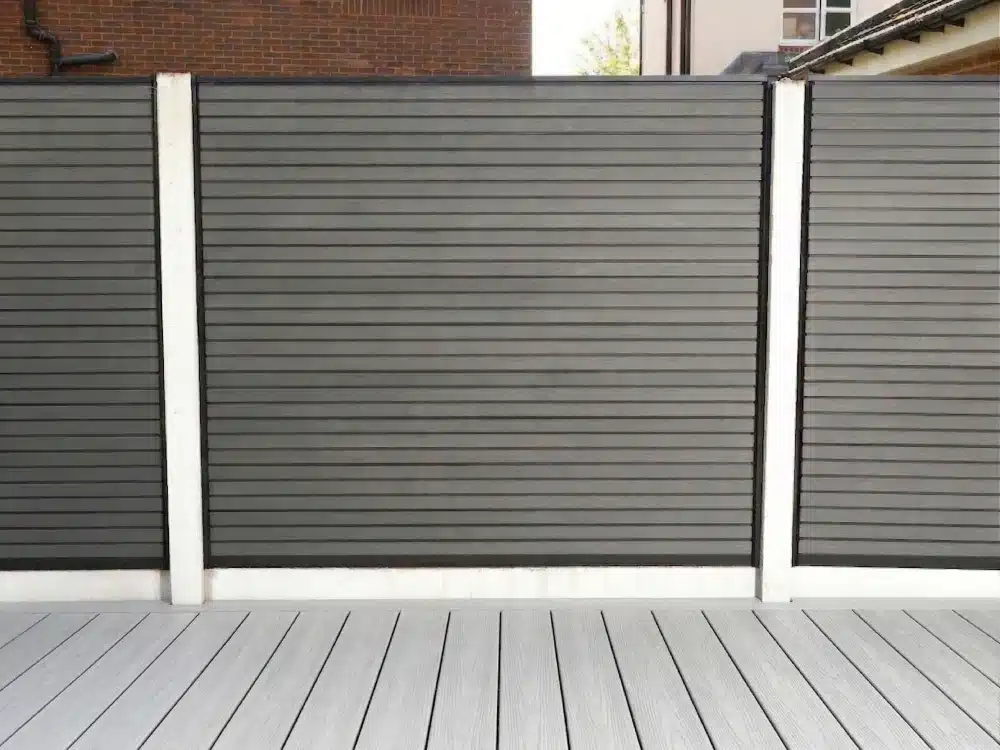
Anthracite Grey composite fencing closely compares to the highly popular RAL 7016 colour. This makes it the ultimate choice for pairing with modern bi-fold doors and dark window frames, creating a seamless, high-end architectural transition from house to garden. Space Perception: If you have a smaller or north-facing garden that suffers from heavy shade, opting for a Grey composite fencing in a lighter shade can be a brilliant design trick. It naturally reflects more sunlight, visually enhancing the space to create a brighter, larger-looking area.

While darker greys are incredibly striking, be aware that dark, smooth finishes can show light-coloured dust and dried pollen slightly more than mid-tones.
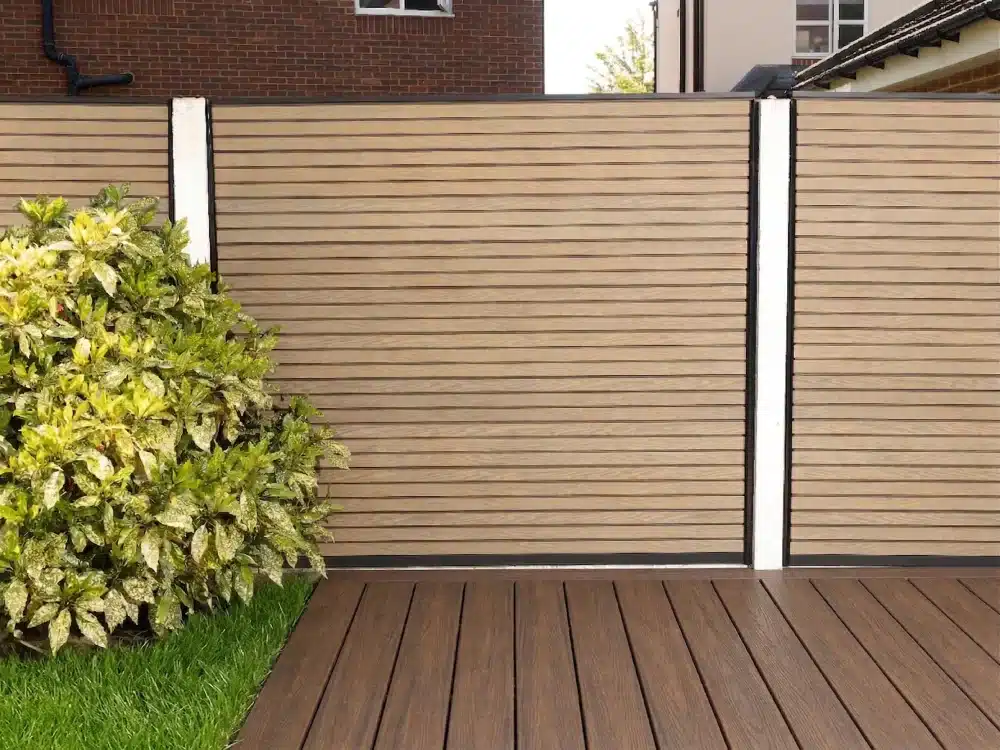
We are seeing a massive surge in homeowners leaning towards rustic, natural vibes. These vibrant, organic tones closely mimic the warmth of traditional timber, but without the gruelling yearly upkeep of staining or painting. A major advantage we cover deeply in our composite versus wood fencing guide
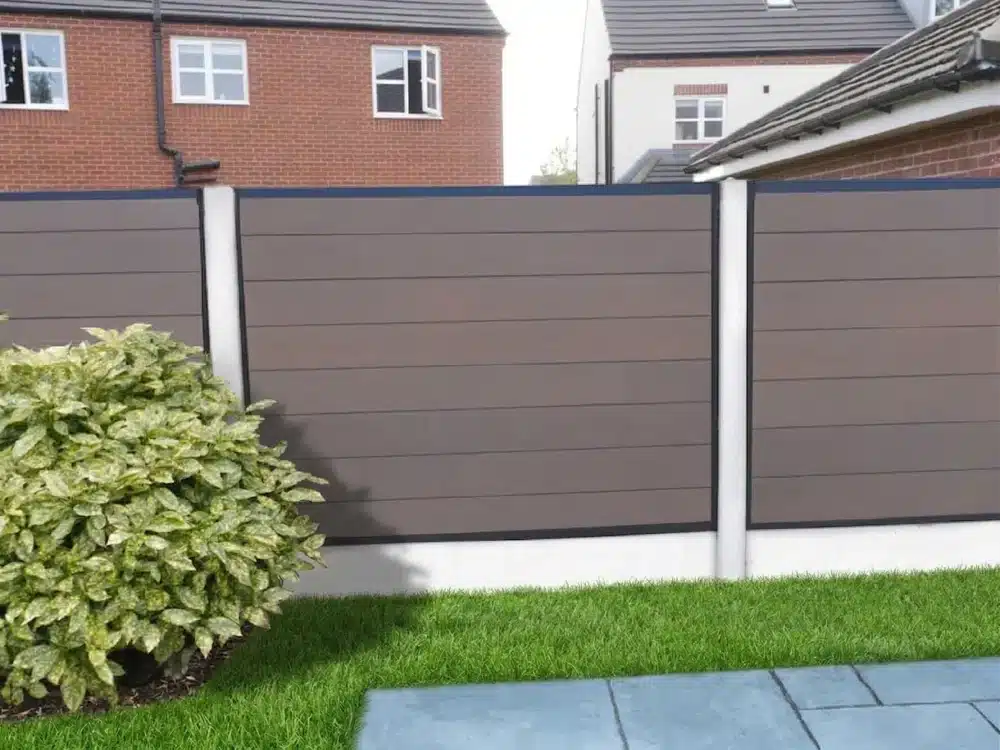
By taking your surrounding landscape into account, you can make a much smarter design choice. Brown composite fencing including warmer teak and walnut-inspired shades, sits harmoniously alongside leafy borders. The natural timber look seamlessly blends into gardens filled with flowers, creating a vibrant, living landscape
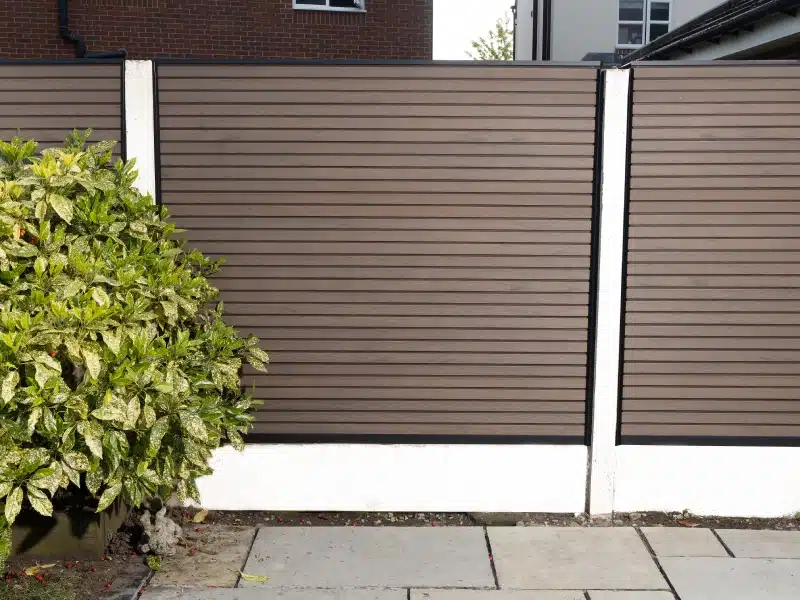
Mid-tone browns are the most “forgiving” colours on the market. The natural variation in the woodgrain texture hides dust, muddy splashes from the flowerbeds, and minor scratches better than any monochrome colour.
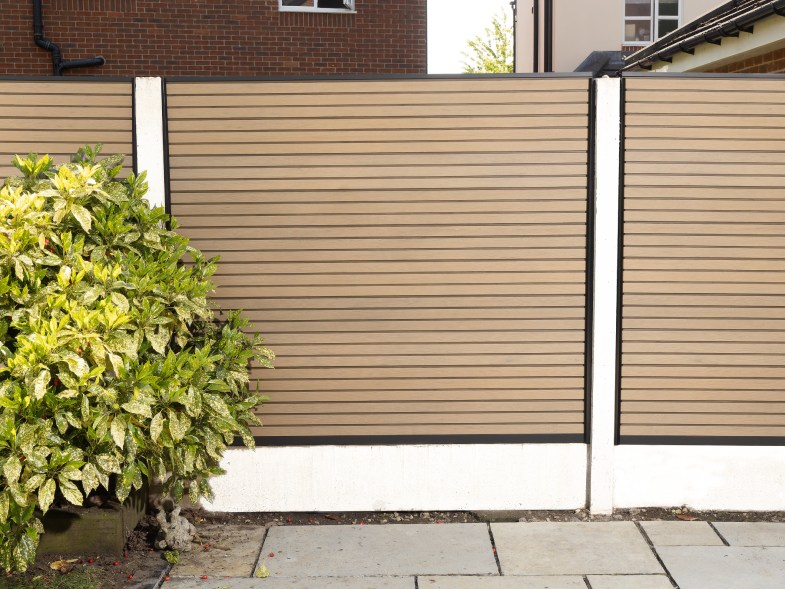
You might wonder why we bundle these shades together. Because composite focuses on authentic wood replication, different providers use various names like Walnut, Chocolate, Teak, or Dark Brown—for very similar hues. Always order a physical sample to see the exact shade.
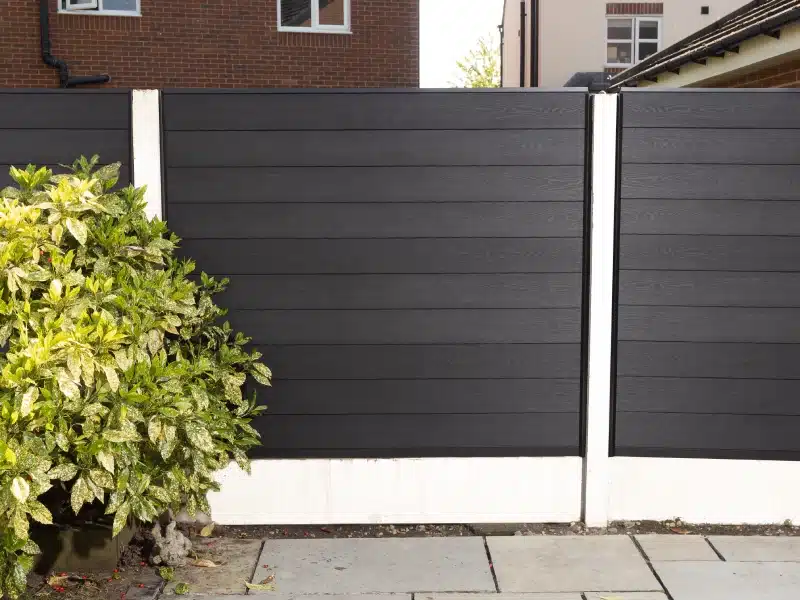
Charcoal and black shades are seeing a rapid rise in popularity as the ultimate garden backdrop. Offering a striking, minimalist look, these cold tones push the boundary line back, drawing the eye to the features in front of the fence.
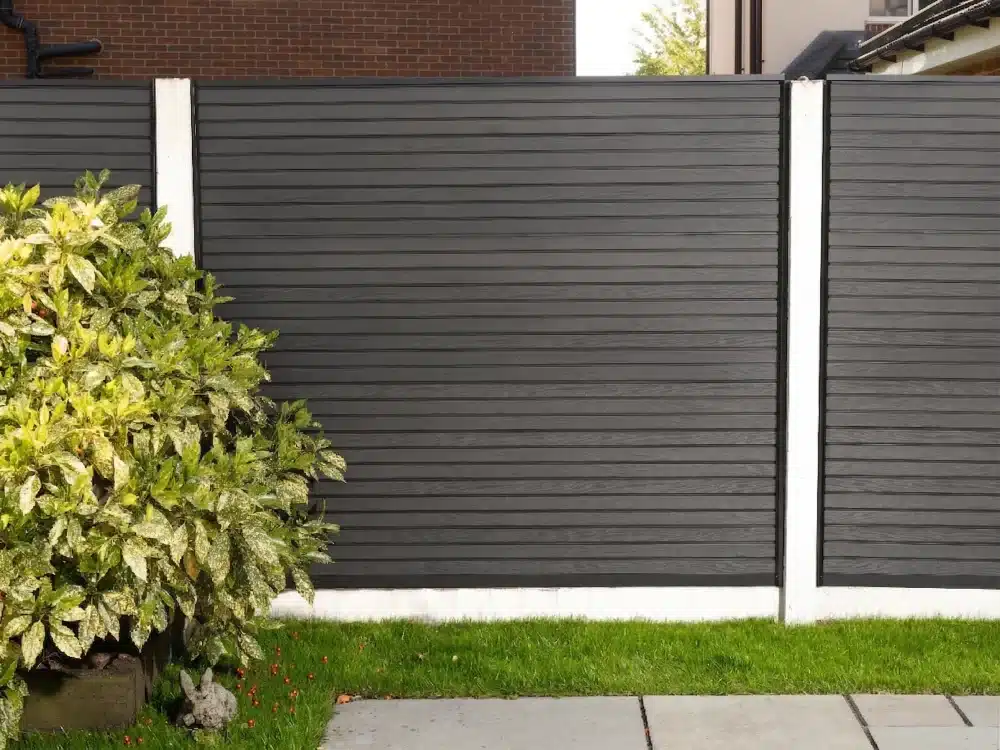
Black composite fencing is a bold colour on its own, devoid of all colour, meaning it brings shine to your garden by enhancing what already exists. Leafy greens, vibrant blooms, and light-coloured garden furniture absolutely ‘pop’ against the striking, shadowy background of a black fence.
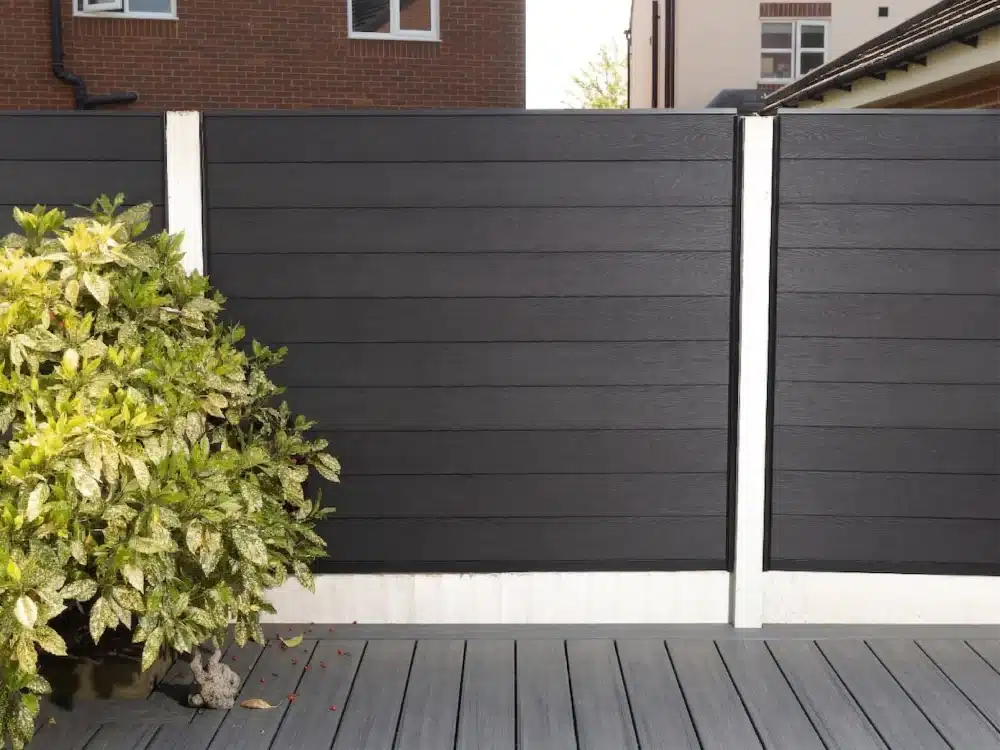
Just like Anthracite, black hides dark mud perfectly but requires an occasional hose-down to remove light dust or watermarks during dry spells.
If you’re still deciding how these colours might work with your property, exploring composite fencing ideas helps you visualise how different shades, styles, and surrounding materials work together in real garden settings.
When selecting your composite fencing colour, you must look beyond simply picking your favourite shade. By taking into account your garden’s lighting, the surrounding foliage, and the physical realities of the material, you can make a confident decision that will beautifully frame your outdoor living space for decades to come.
 Previous Article
How Stain-Resistant is Composite Fencing? An Engineer's Guide


Does Composite Fencing Fade? The Honest Truth About Fading Fence Panels

