


 Previous Article
How Much is Composite Fencing in the UK?
When researching modern composite fence panels, you will often hear the terms “stain-resistant” and “stain-proof” used interchangeably. They are not the same thing.
Let’s be clear: No outdoor surface is completely stain-proof. However, having designed, developed, and supplied composite materials for nearly a decade, we know that modern composite is extremely stain-resistant—provided you choose capped rather than uncapped boards. Because our composite fencing uses the exact same highly durable formula as our premium decking, its structural resistance to stains is identical.
But there is one massive difference that gives composite fencing a distinct advantage over decking: gravity.
All of the traditional data regarding composite staining is focused on decking, which is installed flat. A flat surface catches everything: dropped drinks, pooling rainwater, and direct spills from the BBQ.
Composite fencing, however, is installed vertically. This simple change in orientation completely alters how the material interacts with stains:
Gravity Does the Heavy Lifting
Rainwater, dirt, and debris simply cannot pool on a vertical surface. Aside from very minimal water resting in the grooves of a slatted panel, water sheds instantly, taking surface dirt with it.
Splashbacks, Not Spills
You rarely host a BBQ directly against a boundary line, and guests do not stand facing a fence dropping drinks onto it. Instead of dealing with direct, pooling spills, your fence will mostly only ever face minor “splashbacks.”
The "Out of Sight" Trap
Because a fence doesn’t take the same heavy foot traffic and intense spills as a deck, it is very easy to forget about it. However, fences are prime targets for bird droppings, wind-blown pollen, and algae. Regular, simple cleaning remains essential to stop these from settling.
While gravity protects your fence from most heavy spills, the ultimate level of stain resistance comes down to the type of composite board you choose.
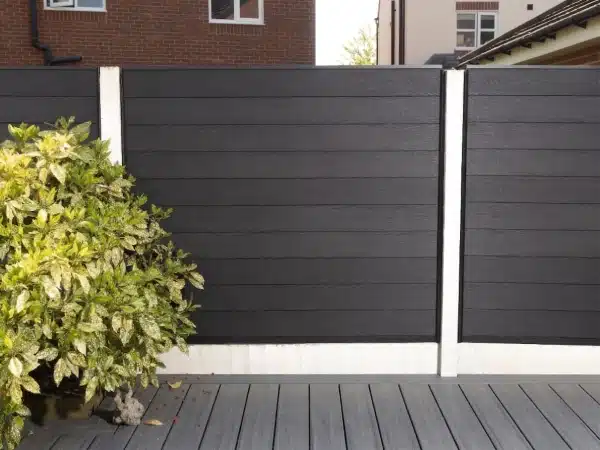
Most composite fencing on the UK market today is uncapped. While it offers vast improvements over traditional wood, these boards have a slightly porous surface where the wood fibres are exposed. If a stray splash of grease or a heavy bird dropping lands on the panel, the natural fibres can absorb it if not cleaned away. They are also slightly more prone to organic algae build up during wet winters.
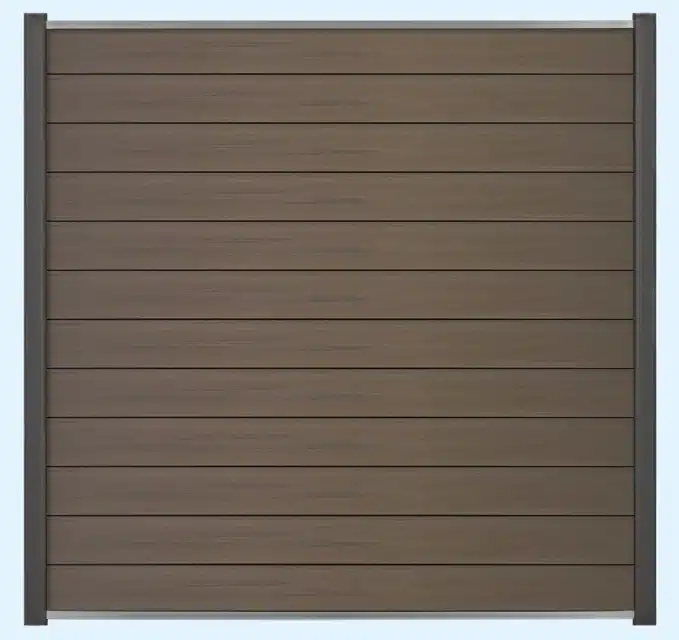
For increased surface protection, modern capped boards are wrapped in a protective polymer shell or “cap”. This outer layer reduces moisture absorption and helps prevent everyday spills, splashbacks and grime from penetrating the composite core.
Our capped composite fence panels use this additional protective surface for customers who want increased stain and moisture resistance with even lower maintenance requirements.
We’ve carried out our own 24-hour stain testing on our composite decking ranges using everyday substances including red wine, grease, beer and vinegar. Because the same composite surface technology is used across our decking and fencing products, these tests give us first-hand evidence of how capped and uncapped surfaces respond when contaminants are left in contact with them.
You can watch our 24-hour composite stain test to see the testing and results for yourself.
An Engineer’s Verdict: While gravity saves uncapped fences from most major spills, our tests confirm that capped composite fencing is the ultimate, worry-free solution for busy homeowners.
Even though fencing avoids many of the direct spills encountered by decking, understanding how to clean the surface correctly is still important. While staying on top of routine composite fence cleaning and maintenance prevents most grime buildup, here is how to safely tackle the most common stubborn stains on uncapped boards.
For Algae, Mould, or Hard Water Spots
Because fences face the wind, they catch spores. For organic stains like algae or the white spots left by hard water, a diluted solution of white vinegar is highly effective. Apply it to the area, scrub gently with a soft brush along the grain, and rinse thoroughly.
For Animal & Bird Droppings
This is the most common issue for fencing. To remove droppings safely, first rinse the area with a hose to soften the material. Apply a little warm, soapy water and use a soft-bristle brush to gently scrub it away. Never use a sharp object to scrape the surface, as this will gouge the composite.
For Splashbacks (Oil or Grease)
If your BBQ is positioned near the fence and causes a grease splashback, it should be dealt with quickly. Hot, soapy water (using an ammonia-free washing-up liquid) is excellent for breaking down grease. Apply the solution and scrub before the oil settles into the wood fibres.
⚠️ Important: Avoid Household Bleach
We strongly advise against using neat household bleach on your fencing, especially on Uncapped boards. Bleach aggressively breaks down the natural wood fibres, leading to permanent discolouration and a patchy appearance. Stick to warm soapy water or specific composite cleaners.
While no outdoor material is truly “stain-proof,” our composite fence panels come incredibly close. Thanks to their vertical installation, gravity naturally protects your panels from the heavy spills and standing water that plague traditional decking.
If you are using standard uncapped panels, a simple, regular wash is all you need to keep bird droppings and algae at bay. If ultimate stain resistance is your top priority, choosing a premium, second-generation capped composite fence will guarantee a beautiful, easily wiped boundary for decades to come.
 Previous Article
How Much is Composite Fencing in the UK?

Guide to Composite Fencing Colours: Trends, Pairings, and What to Expect
