


 Previous Article
Do You Need Planning Permission for Decking in the UK?
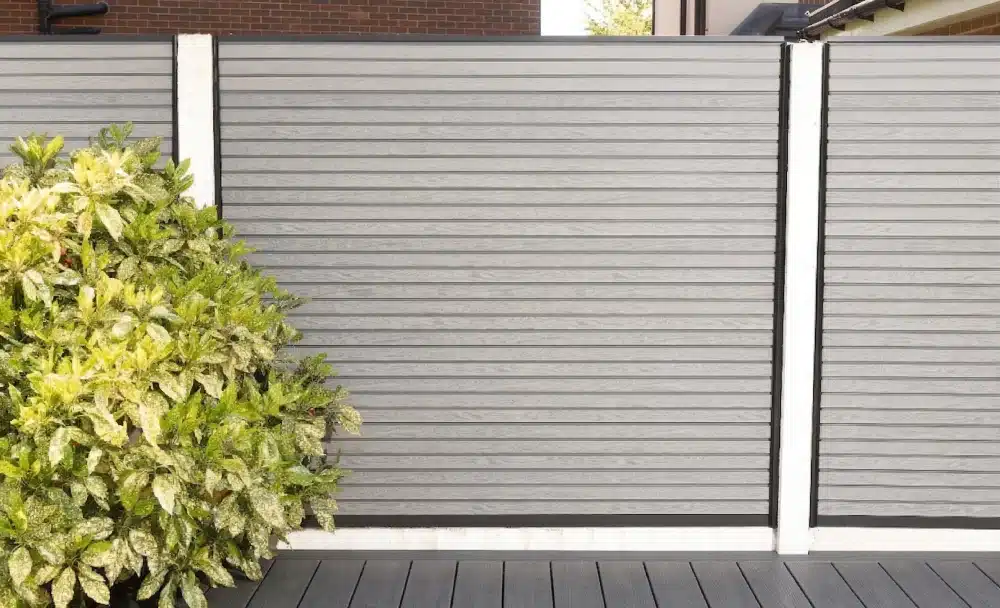
When searching for the “best composite fencing” usually, you will be met with a list of suppliers claiming that each of their products is the number one brand.
But what are the facts behind the advertisement bias and industry jargon?
The “best” composite fencing isn’t measured by a brand name – it’s influenced by the layout and environment of your garden, the budget you have to work with, and your skill at DIY.
What is suitable for a sheltered, urban garden won’t do for an open, countryside property facing 60mph winds.
Before we look at your specific garden needs, it is important to first evaluate the supplier.
The best suppliers have a hand in the manufacturer and development of their product, not just simply importing standard boards; they perform investigative testing and improvements based on results and customer feedback.
For example: our exclusive, Slatted Fence Panels were developed as a direct result of the UK’s trending demand for contemporary batten composite cladding, and our enhanced wood grain finishes were engineered specifically to provide richer, more stabilised, colour consistency in first-generation boards.
To find the best composite fence for you, here are the 6 most crucial factors you need to consider:
The biggest debate currently in the composite fencing scene, is whether to buy standard “Uncapped” (First Generation) or luxury “Capped” (Second Generation) boards.
The industry secret of composite fencing’s vertical installation owes to much of its reduced maintenance and success. Unlike composite decking, which sits horizontally and suffers heavy sun exposure of direct UV rays, standing water, and foot traffic, our enhanced composite fence panels take significantly less environmental punishment due to this factor.
This vertical orientation allows high-quality Uncapped composite fencing to be perfectly suited for the vast majority of UK gardens.
Unless it is essential that your composite fence has almost no colour fade and is ultimately protected from exposure to severe organic stains, spending twice as much on capped fence panels can often be an overkill for your vertical boundary and an unnecessary expenditure. So, in most cases, it is best to stick with uncapped variants.
If stain and fade resistance are important factors for your garden, understanding the difference between capped and uncapped boards can help you make a more informed decision. In particular, it is worth considering their stain resistance and how much colour change you can realistically expect over time before deciding whether the additional protection of a capped board is necessary for your project.
Composite fencing kits are composed of a modular system built from individual interlocking parts. This design feature means that the “best” system is the one with the strongest core components involved.
Pay very close attention to thickness of the boards before purchasing. A budget supplier may sell you boards that are 15mm or 18mm thick; these thin boards can warp or rattle over time, due to their reduced durability.
The best long-term stability comes from heavy-duty profiles. For instance, our fencing boards are engineered to provide the user with a robust 20mm thickness, maximum strength and structural integrity for many decades.
The best fencing for an enclosed townhouse will differ in suitability from the best fencing for an exposed coastal property, considering the environment and surroundings of your home will factor into this decision.
If your property is particularly exposed, choosing the supporting posts, rails and reinforcement can be just as important as choosing the fence boards themselves. Our guide to composite fencing for windy areas looks at the additional factors to consider for more exposed gardens.
Your starting point dictates the best product for your project:
If you’re still weighing up your options, comparing the different composite fencing kits on the market will help you determine the exact setup required for your existing garden posts.
A fence is a key visual element to your garden. The most suitable fencing should elevate the aesthetic of your property. If you have a traditional home, the classic Smooth, Grooved, or Wood Grain panel is ideal in helping to complement its structure.
However, if you are looking for a modern, architectural finish, trending designs such as Slatted Composite Fence Panel offer an exclusive, premium look that mimics high-end garden screening without any of the exhausting timber maintenance.
If you’re still deciding which style will work best with your property, our composite fencing ideas and inspiration guide shows how different panel designs, layouts and surrounding materials can work together in real garden settings.
Finally, factor in your timeline. If this is your “forever home,” investing in premium Aluminium Kits or luxury Slatted designs is a wise, permanent upgrade.
However, if you are planning to move in a few years but desperately need to replace a broken fence to sell the property, look for a highly cost-effective upgrade. The best route here is to opt for standard Uncapped Smooth/Grooved boards to install into your existing concrete posts.
Your expected time in the property should also be considered alongside the initial cost of the system. If you’re setting your budget before choosing a product, factoring in composite fencing costs in the UK will give you a clear breakdown of the prices and variables that impact your overall spend.
Pro Tip: Look for winter sales or end-of-season deals to secure the best price on these standard kits.
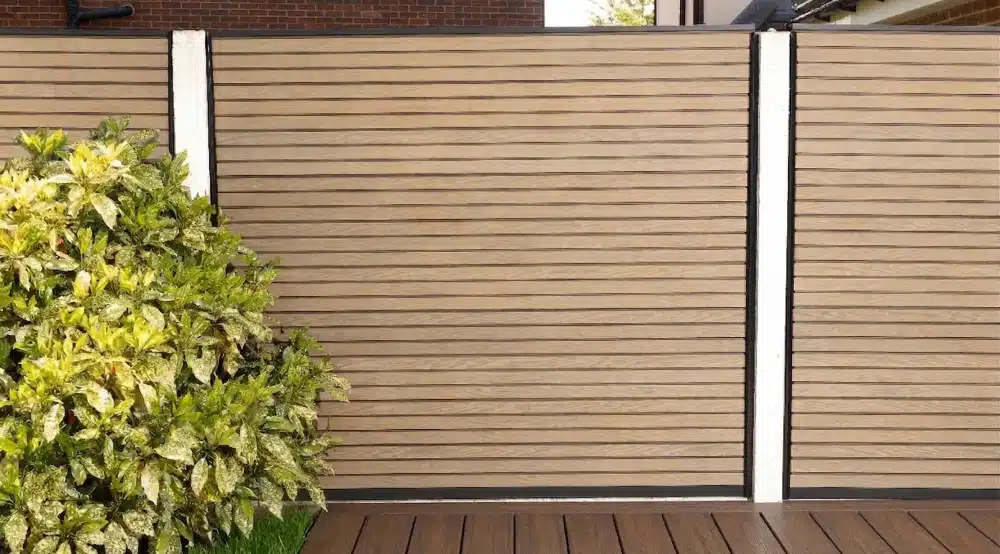
When choosing the “best” composite fencing, it ultimately comes down to your personal choice and unique project needs. From a design standpoint, colour, style and type are important considerations when choosing a fence that works with the rest of your garden. If you’re unsure which shade will suit your property and surrounding landscape, comparing composite fencing colours will help you evaluate the best options for your garden before making a final choice.
In terms of quality, durability, and longevity, the generation of the board plays a major role. For example, if almost zero fading and high stain resistance are important to you, then selecting a capped fence panel or board would be considered the best option. However, for a low-maintenance, modern design with minimal upkeep, uncapped boards—the most commonly sold in the UK—will be the best choice for most.
As for performance and manufacturing, product design and quality are where the real value lies. As mentioned, board thickness is crucial to ensure the product stands the test of time. You will want a panel or board with a 20mm thickness and above; anything below this runs a high risk of damage, so be careful not to fall into this trap. Production techniques matter—we have perfected ours for almost a decade, testing in real-world settings to develop our enhanced wood grain patterns and trending slatted designs. We know that boards need to be robust, so always look for a supplier that has proven experience with composite products in long-term, real-world settings, which should be clearly reflected in their customer reviews.
 Previous Article
Do You Need Planning Permission for Decking in the UK?

How Much is Composite Fencing in the UK?
