


 Previous Article
Can You Paint, Seal, or Stain Composite Decking?
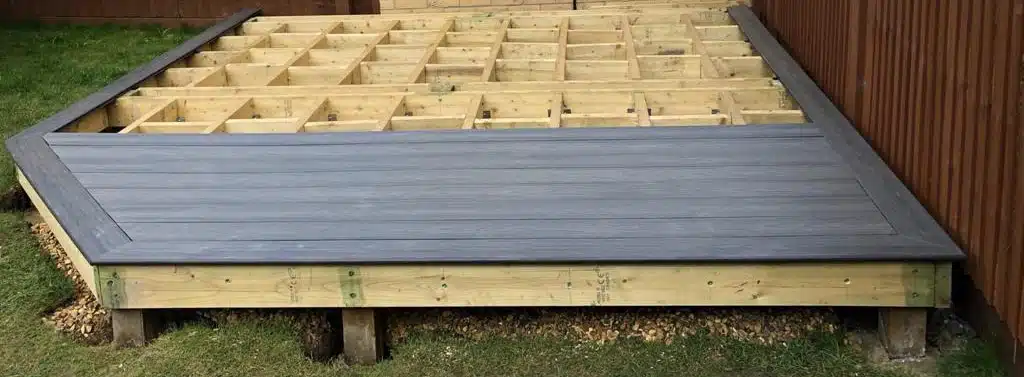
When it comes to building a new composite deck, checking and securing the right planning permission can make or break your project.
There are numerous horror stories online of homeowners being forced by local councils to completely tear down newly built decks at their own expense. Recently, a homeowner in Dorset was ordered to remove their decking because it was built too close to the grave of famous fossil hunter Mary Anning. In other cases, councils have actively used Google Earth to spot illegal extensions and decking builds.
Some homeowners read up online and try to rely on the “four-year loophole” suggesting that if a council doesn’t enforce removal within four years, the deck is safe. Do not risk this. As any edit to it can reset the clock and if you are forced to take your deck down, you lose all the money you invested in materials and labour.
To ensure your project is completely legal and stress-free, here is everything you need to know about UK decking planning permissions and building regulations.
In the UK, the majority of garden decking falls under “Permitted Development.” This means you do not need to apply for planning permission, provided your project meets all of the following strict criteria:
If your deck fits these rules, you are generally safe to proceed with installation of your deck. However, we always recommend double-checking with your local authority just to be sure.
Even a simple ground-level deck can become legally complex depending on where your house is located. You must apply for planning permission if any of the following apply to your property:
It is a common, and expensive, misconception that the “Permitted Development” rules apply to everyone. They do not. Permitted Development rights generally only apply to houses. If you live in a flat, a maisonette, or a commercial property, you do not automatically have these rights. You must almost always apply for full planning permission before building any decking, regardless of the height or size.
It is crucial to understand that Planning Permission and Building Regulations are two completely different things.
Even if you get planning permission for an elevated deck, you must still adhere to strict safety regulations. If your decking has a drop of more than 60cm (600mm), building regulations mandate that you must install safety balustrades or handrails, and these rails must be exactly 1100mm high.
The Party Wall Act Additionally, if your decking requires deep concrete footings for the support posts, and those footings are dug very close to your neighbour’s property boundary or their house wall, you may trigger the Party Wall etc. Act 1996. This means you legally must serve notice to your neighbour before construction begins. Failing to do so can result in an immediate legal injunction halting your project.
Even if your hired fitter says “it will be fine,” the legal responsibility ultimately falls on you as the homeowner. Always check, prepare, and verify.
Even if your project perfectly meets all local planning rules, you could still be forced to tear it down by the original property developer. Many new-build estates and modern housing developments have strict “restrictive covenants” written into the property deeds. These are private rules that can ban you from altering the front of your house, erecting fences, or building raised decking. Always check your title deeds before breaking ground.
Because local councils can occasionally enforce specific neighbourhood rules, your first step should always be to contact your local planning authority.
If you are unsure who your local authority is, you can use the official UK Government Planning Portal. Simply visit www.planningportal.co.uk/find-your-local-planning-authority, enter your postcode, and it will immediately provide the website and contact details for your specific council.
Navigating building regulations and planning approvals can feel overwhelming. The absolute best way to ensure your deck is compliant, safe, and legal is to hire an experienced tradesman registered under the Competent Person Scheme. A professional installer can inform the local authorities of your plans, coordinate with a Local Authority Building Control Body (BCB) on your behalf, and ensure the structural heights meet the strict 1100mm balustrade rules.
Do your research, follow the government guidelines, and build with confidence.
 Previous Article
Can You Paint, Seal, or Stain Composite Decking?

What is the Best Composite Fencing?
