


 Previous Article
Best Composite Decking UK: Navigating the Market & Avoiding Common Mistakes
When it comes to composite decking, the market is split into two distinct generations: Uncapped (perfect for strict budgets) and Capped (perfect for ultra-low upkeep and durability).
With almost a decade spent designing and developing composite decking, we have learned that there is no “one type fits all” solution—hence our specific product offering. Like any investment, your purchase should be based on your personal requirements.
The market is flooded with different designs, profiles, and suppliers, so you are not alone if you feel confused. In this article, we aim to pass our technical knowledge on to you. We will help you narrow down the options by classifying them into specific types, ensuring you choose the right board for your project.
If you are anything like me, you want something to showcase!
As there is a lot of information to digest on this page, feel free to jump to the section you need or review our ‘Quick Glance’ table below to compare all types side-by-side.
Here is a summary of the different composite decking types to help you find the perfect one for your project.
| Feature | Capped | Uncapped | Solid Composite | Hollow Composite |
|---|---|---|---|---|

|
|
|
|
|
| Price | Higher | Lower (Budget-friendly) | Highest | Affordable |
| Maintenance | Ultra-Low (Wipe clean) | Low (Regular cleaning) | Low (Regular cleaning) | Low (Regular cleaning) |
| Stain & Mould Resistance | Excellent | Vulnerable | Vulnerable | Vulnerable |
| Fade Resistance (UV) | Highest (Minimal fading) | Good (Fades initially) | Varies (Good to High) | Varies (Good to High) |
| Durability & Strength | High | Good | Highest (Impact resistant) | Good (Strength varies by core shape) |
| Authentic Appearance | Varies (Can look plastic) | Good | Good But Varies (Can look plastic) | Varies (Can look plastic) |
| Best For | High footfall, South-facing gardens, Long-term investment | Budget-conscious buyers, Average family homes | Commercial settings, High-impact areas, Maximum longevity | DIY installation, Running cables, Standard residential projects |
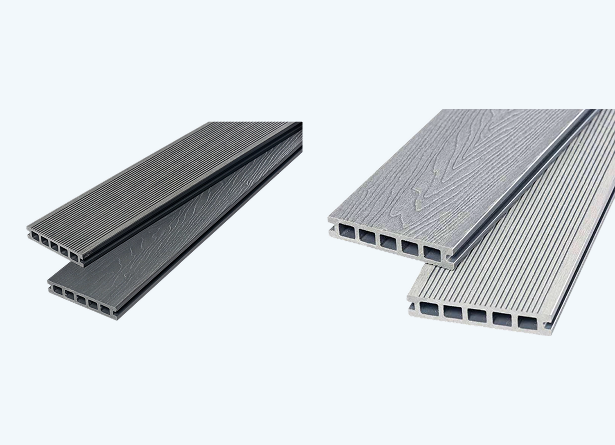
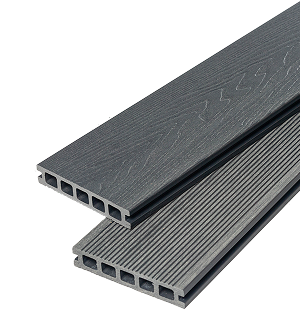
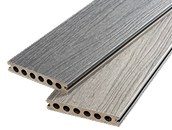
Capped composite decking, often referred to as “second-generation” or “shield” boards, are produced with a protective co-extrusion layer. This outer shell acts as a shield against Mother Nature’s elements. They boast increased moisture resistance, absorbing less than 1% of moisture in most cases (unlike uncapped boards that absorb 3-5% on current market research), which prevents the risk of mould and mildew growth.
Tech Term: Why “Delta E” Matters More Than “Grey Scale”:
You might see other suppliers mentioning “Grey Scale” ratings (ranked 1–5). Be careful—this is an older, manual method where a person simply looks at the board to judge the fading. A score of 4/5 can still mean a visible colour shift that looks patchy in your garden.
Delta E is the modern, digital standard.
The Difference: Think of Grey Scale like pacing out a distance with your feet (a rough estimate), while Delta E is like measuring it with a laser (precise calculation).
The Result: A Delta E score of <2 means the colour change is so microscopic that the human eye can barely detect it. If a supplier can’t show you Delta E data, they likely haven’t tested their boards to the highest standard.
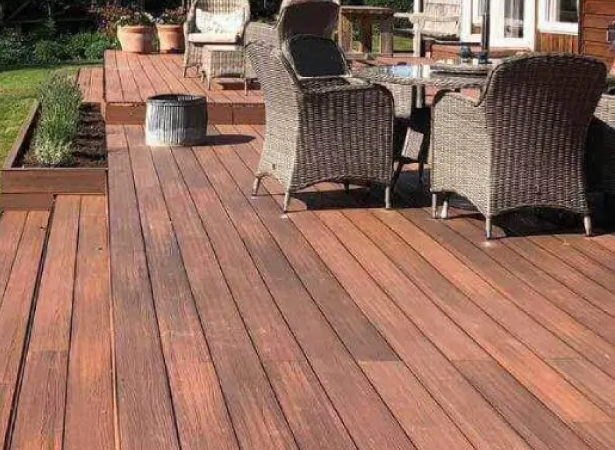
Early composite decking promised to be maintenance-free but struggled with staining and fading. The industry adapted by creating this “shield” technology (a 0.5mm polymer cap) to truly resist UV fading, red wine stains, and mould.
Key Benefits for Busy Households:
Stain Resistant: Due to its low absorption of moisture, food and drink spillages from social gatherings with family and friends can be simply wiped away.
Family Friendly: If you’re like me and have 5 grandkids, you’ll know they are prone to constantly spilling drinks or dropping food! Capped boards are robust enough to handle the accidents of busy family life, outdoor events, and relaxation without leaving permanent marks.
Realistic Expectations on Fading: While many suppliers claim “Zero Fading,” we believe in honesty. This material will see minute amounts of colour loss—typically just 5-10% throughout its entire lifespan. This makes it vastly superior to wood or uncapped boards and the perfect choice for south-facing gardens exposed to intense sunlight.
The only negative feedback on the new second-generation, shielded technology was that the boards appeared to look plastic and cheap in their appearance, not really providing the authentic wood-like texture and appearance research set out to achieve. This drawback in appearance put customers off from purchasing.
The market was demanding an authentic wood look and colour retention, without the annoying maintenance associated with wood. So far, second-generation composite decking boards had failed to achieve a natural wood look; indeed, even today some manufacturers are still failing to achieve it without producing cheap-looking plastic boards.
Leading manufacturers and suppliers listened and continue to perfect their designs and manufacturing processes to produce a composite decking board indistinguishable from real wood.
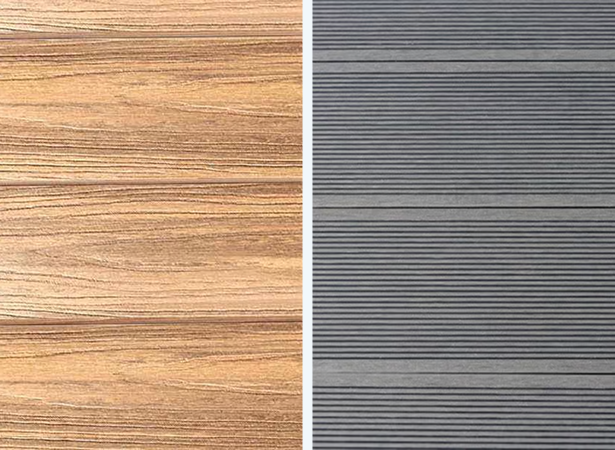
Capped composites are relatively stronger and more durable than their older counterparts, but they also offer a unique design advantage: Reversibility.
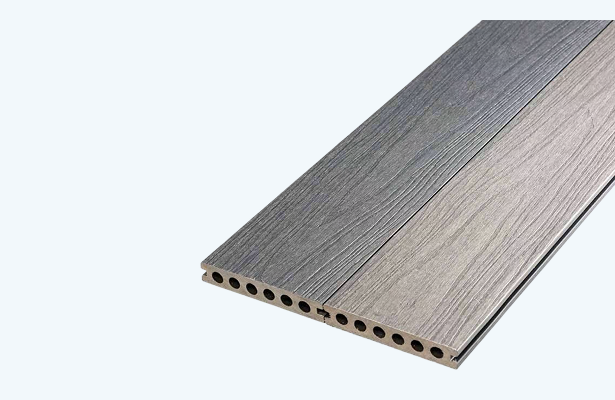
Some capped designs now offer a dual-colour design; this means that one surface is a different colour from the other (e.g., Light Grey on one side, Charcoal on the other).
Design Freedom: This allows you to create stunning “contrast borders” (picture framing) using a single board type.
Future Proofing: It allows you to reverse the entire composite decking board to provide a fresh new colour years later if you want a change.
Structural Strength: Capped boards tend to utilize a Circular Hollow structure. As an engineer, I prefer this over the standard Square Hollow structure found in cheaper boards because the circular arch provides more material density and better structural integrity.
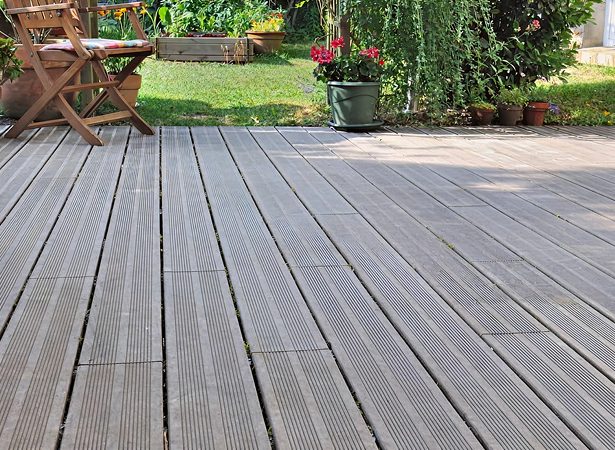
Due to their increased added benefits, capped boards come at a higher price. The realistic question is whether you will benefit from these advantages.
If you’re like me and have 5 grandkids, you’ll know they are prone to constantly spilling drinks or dropping food during a family BBQ! This is where the investment pays off.
The “Stress-Free” Value: With cheaper boards, a dropped burger or spilled wine is a panic moment. With Capped boards, it’s just a wipe.
The Verdict: If you want to sit back, relax, and enjoy outdoor events without worrying about the stains and marks left behind, then yes—the extra cost is absolutely worth the peace of mind.
So now we understand capped boards, their strengths and performance, why would anyone consider purchasing uncapped?
The reason uncapped boards are still a popular option in the UK is, we don’t see a large amount of UV ray exposure compared to that of the USA & Australia, so colour stability and fading are not as intense; however, this is a minor reason, the better one is cost.
But first let’s look at what they are and then move on to performance and cost.
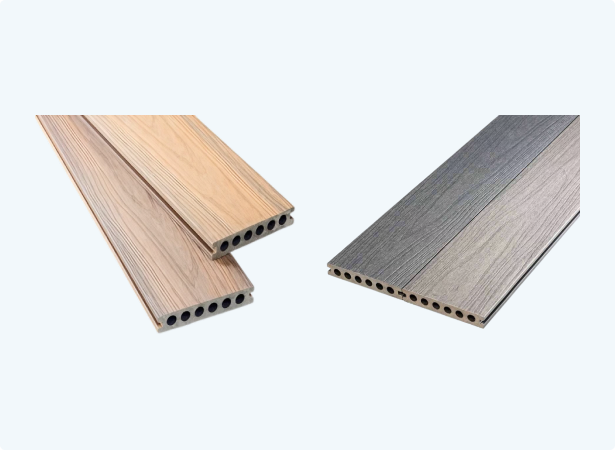
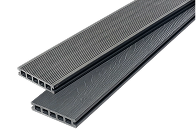
Uncapped decking boards are often referred to as first-generation composite decking in the industry. First-generation decking boards are produced with a wood fibre surface layer rather than a PE layer; in the consumer’s eyes, this provides more authenticity in appearance and feel.
While uncapped composite decking boards are sturdy, they are more vulnerable to damage, including moulds, mildew, fading, and staining. These types of older composites need to be maintained regularly to prevent damage.
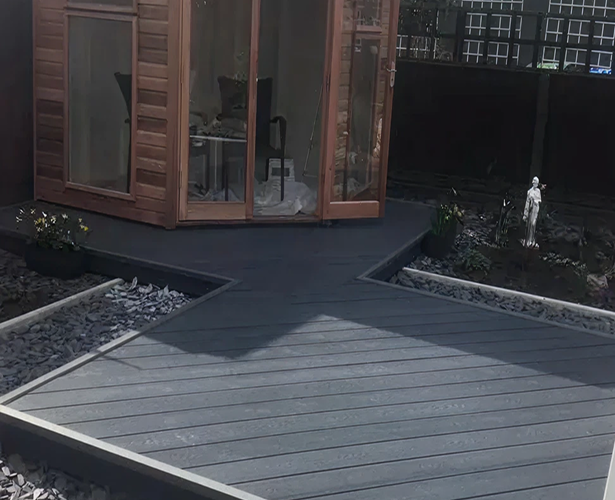
As mentioned, uncapped decking boards will fade more than capped decking boards; wood fibre surface layers are not as resistant to UV rays and are not as hard-wearing when compared with second-generation boards.
A key point to remember is that uncapped composite decking board surfaces are made from real wood fibres, helping to achieve a natural wood grain appearance. However, this type of first-generation or traditional uncapped composite decking board goes through a natural weathering process.
The First 3-6 Months: They will fade from exposure to the Sun’s UV rays. However, good quality boards will colour stabilise after this initial weathering period due to a manufacturing process that makes use of Grade ‘A’ quality recycled plastics.
Grade ‘A’ Quality: These plastics are of the highest quality and are mainly imported from the USA and Europe to produce a composite decking board with improved fade resistance properties built-in. Although the colour fades during the first 3 months, it is gradual and very minor, which most customers rarely even notice.
Important Note: Contrary to the advice and information given by many decking manufacturers that the boards do not fade, all decking products, natural or engineered, will experience weathering.
Uncapped boards are still an excellent option for residential homes with an average amount of footfall (a family of 4-5 people). They come with 10 to 15-year warranties depending on supplier; this means if you have any structural defects or issues with the product, you are entitled to a replacement material. Given that first-generation decking boards aren’t as long-lasting as second-generation boards, they are priced more competitively meaning they are more suitable for someone on a budget.
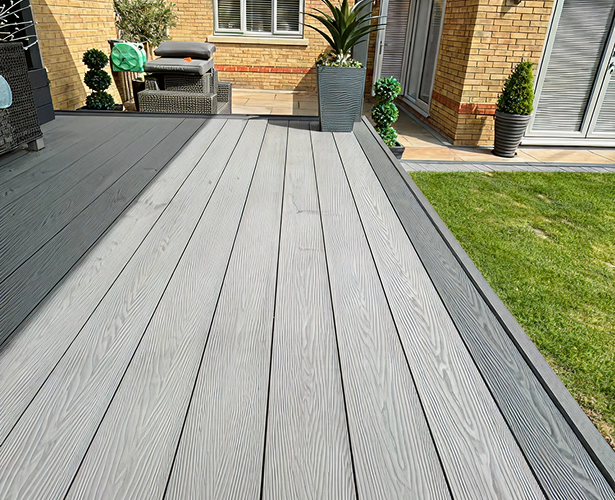
Cost is a large contributor that makes these boards popular, but why? From years of customer feedback, we’ve learned that most buyers of uncapped boards are happy to perform some regular cleaning. This is because they are comparing it to traditional wood, which requires constant sanding, sealing, and staining. From that perspective, uncapped decking is a major improvement and a worthwhile investment, even if it isn’t as maintenance-free as premium capped decking.
Verdict: So, if you’re happy to accept some colour changes and some regular cleaning, then uncapped is the choice for you; they are at least 30-40% cheaper than capped boards.
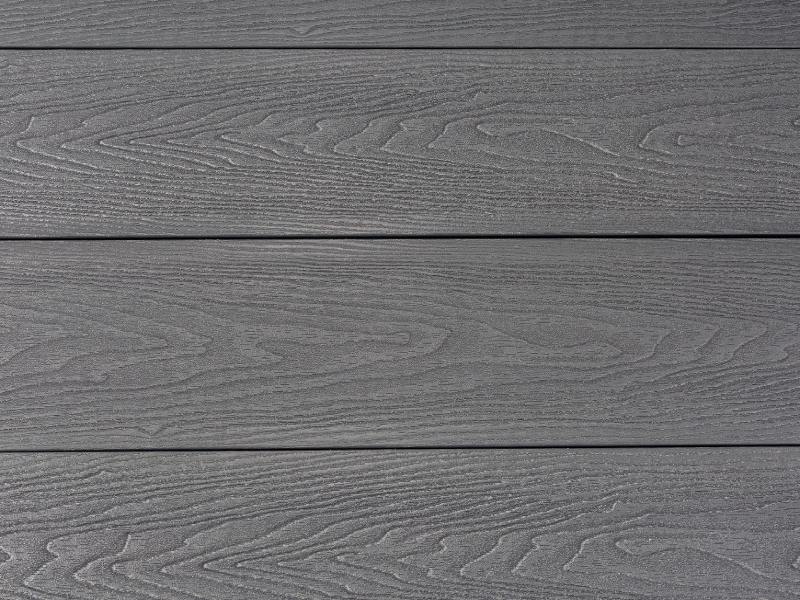
There are two designs with uncapped decking boards, Grooved and Woodgrain.
| Grooved | Woodgrain Boards |
|---|---|
|
|
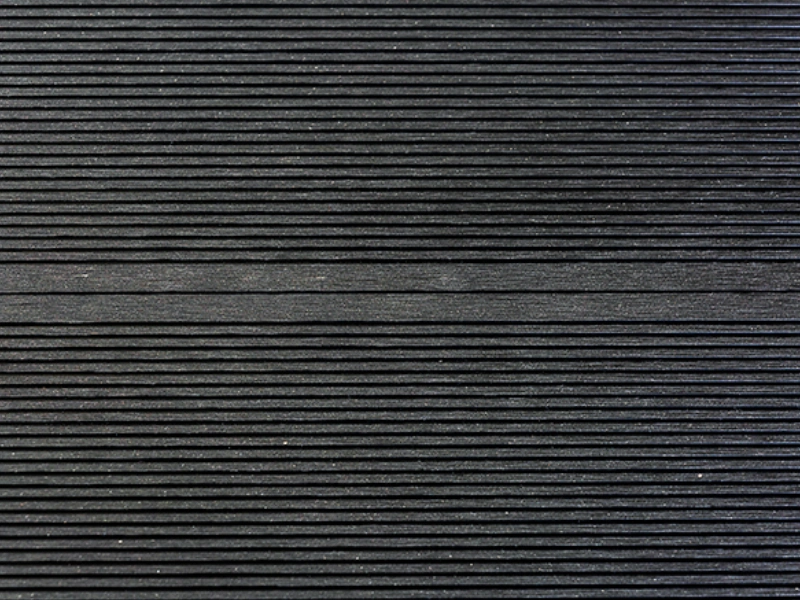
| Grooved boards are the foundation of composite decking. They feature a reversible grooved finish that captures the traditional "decking" look we are used to seeing in the UK. The Finish: They almost always feature a sanded finish for grip. The Verdict: They are robust, stand the test of time, and remain the perfect entry-level pattern for buyers who want a clean, linear look. | Woodgrain boards feature a deep-embossed pattern pressed into the surface to mimic natural timber. Buyer Beware: Many years ago, "wood effect" meant a cheap pattern printed onto the plastic (which would fade in months). Today, quality boards use Deep Embossing. |
The Wood Grain Test: Run your hand over the board. If the surface is rough and you can feel the “waves” of the grain, it is Embossed (Good). If it feels smooth, it is likely a Printed pattern (Avoid).
Now that you have a snapshot of the basics (appearance), it is crucial to understand the production process. This is the hidden factor that makes the difference in performance, even between two boards that look identical on the shelf.
Without giving away too many of our design and development secrets, we will take you through the main types of treatment and explain exactly how they affect the board’s longevity.
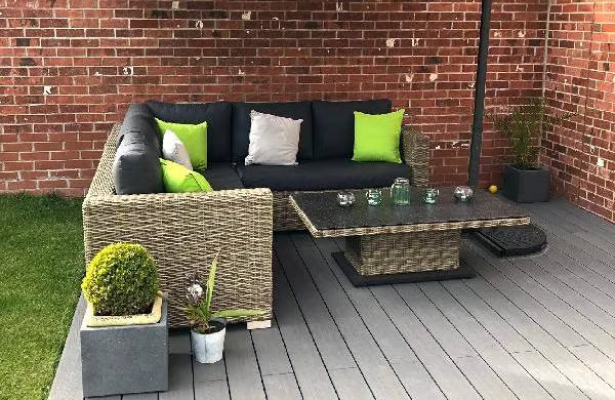
Sanded surface treatment is when the top surface is mechanically sanded, creating light and dark points across the external surface.
The surface is brushed with wire instead of sanded.
After rigorous testing, some suppliers have uniquely produced a board that is rich in colour but still gives a rough texture for authenticity. From internal testing, these new surface treatments see improved stability and long-lasting colour compared to traditional sanded or brushed boards.
Example Note: An example of this can be seen in wood grain composite deck boards here.
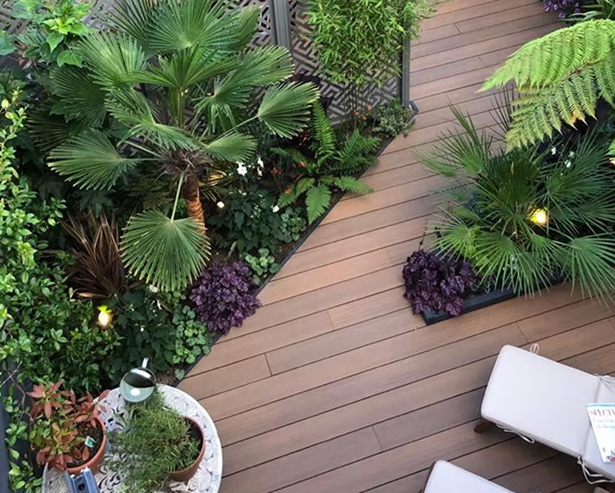
Composite decking has continually evolved during its 30+ year lifespan. In the early 2000s, a printed woodgrain finish was introduced. This evolved further from 2010 onwards, becoming a deep-embossed woodgrain finish that is surface treated, brushed, and sanded to provide a cleaner and more authentic wood look.
The latest techniques and methods being used to perfect a natural woodgrain appearance involve Computer-Aided Design (CAD). Borrowed from the aerospace and car industries, this technology introduces a mix of colours at randomly programmed intervals.
This provides lighter and darker colours within the same board, offering an authentic wood appearance that is indistinguishable from real wood.
Key Note: New “Mixed Colour” technology seen in leading suppliers’ boards takes the beauty and authentic wood appearance to a whole new level. It needs to be seen to be believed—not actually composed of regular timber, yet with none of the maintenance drawbacks associated with exotic wood.
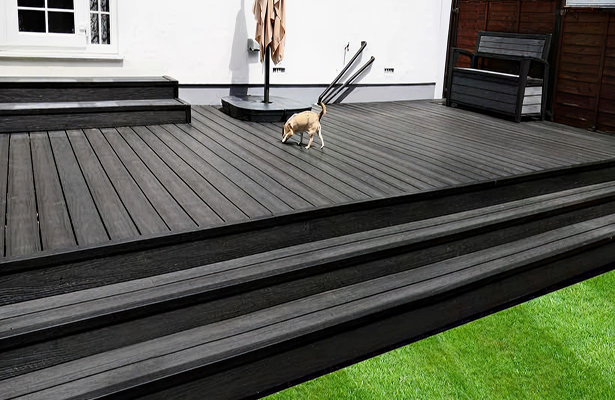
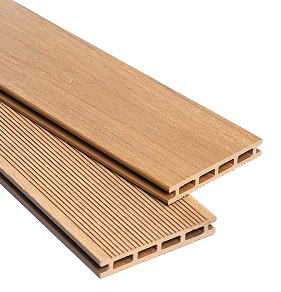
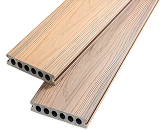
Hollow composite decking, unlike solid composites, is a lightweight decking made with fewer materials. Because of this, they are cheaper and easier to work with.
Ease of Install: As the name implies, they have hollowed segments within the board. This lightweight design increases the speed of installation.
Cable Management: A huge practical benefit is that during installation, low-voltage (12V) cables and wires for lighting can be run neatly through the hollow core.
Hollow decking boards are much more common when compared with solid boards. Solid boards are produced with more material, meaning the cost quickly increases and the manufacturing process takes longer.
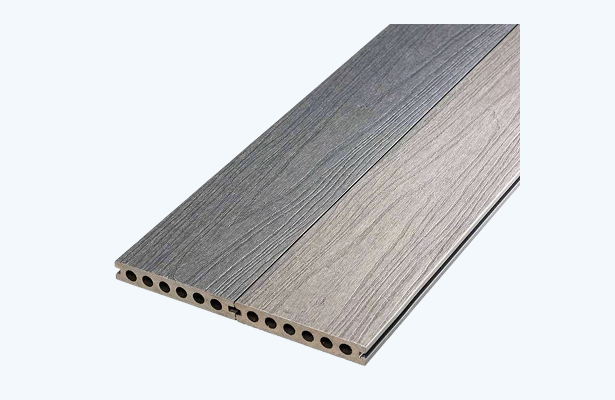
Common Question: ‘Will hollow decking boards be strong enough for my project?’
The overall structural integrity of your decking will mainly come from the decking subframe and the span of the joists beneath the boards. However, if you are looking for a strong board that is still affordable, there are different designs to consider:
4-Square Hollow: Standard strength.
5-Square Hollow: More durable. Think of it like a building having an additional pillar for support.
Circular Hollow: This is the strongest design for a hollow board, and you will often see Capped decking boards with this core.
The Cons: Despite the cost benefits, hollow composites often look like “manufactured materials” (you can see the holes on the ends) and are more prone to damage from heavy impacts than solid boards.
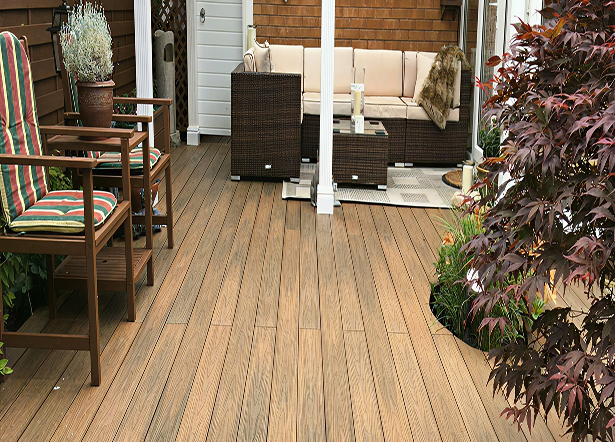
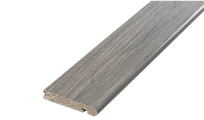
Another composite decking design is a completely solid structure. This provides numerous benefits including enhanced durability, longer lifespan, and excellent impact resistance.
Commercial Grade: With an extended lifespan (up to 30 years), the added mass creates a material that can withstand huge weight and pressure. It is an excellent option for busy commercial settings such as hotels or popular restaurants.
The Trade-Offs While solid composites are excellent choices, they do have some disadvantages:
Weight: Since they are heavier, solid boards are harder to work with during installation.
Expansion: They hold heat for longer. Leaving the correct gaps is vital when installing to prevent buckling.
Cost: Solid boards are considerably more expensive than traditional wood and hollow composite boards, so you should expect to spend more when opting for this choice.
As the composite decking market expands, understanding the different available options and using resources like our complete material comparison is crucial. Uncapped hollow boards are the best-selling composite decking in the U.K. They are affordable and offer low maintenance with strong colour stability when compared to wood; however, they are not as moisture-resistant and will fade over time when compared with capped boards.
Capped composite decking offers increased durability, along with increased stain and fade resistance. They are ultra-low maintenance, only requiring simple cleaning regularly. They offer a longer life span and visual stability even after many years of use. These added benefits are beneficial to customers who are looking for a long-term solution, and a return on investment that comes with these boards after a decade of use.
The key questions to ask upon purchasing are ‘How long will you be in your property for?’ and ‘What level of maintenance and colour change can you accept?’ – If the answer is minimal then capped composite decking is the product for you.
 Previous Article
Best Composite Decking UK: Navigating the Market & Avoiding Common Mistakes

The Ultimate UK Guide to Decking Screws, Nails & Fasteners (2026)
