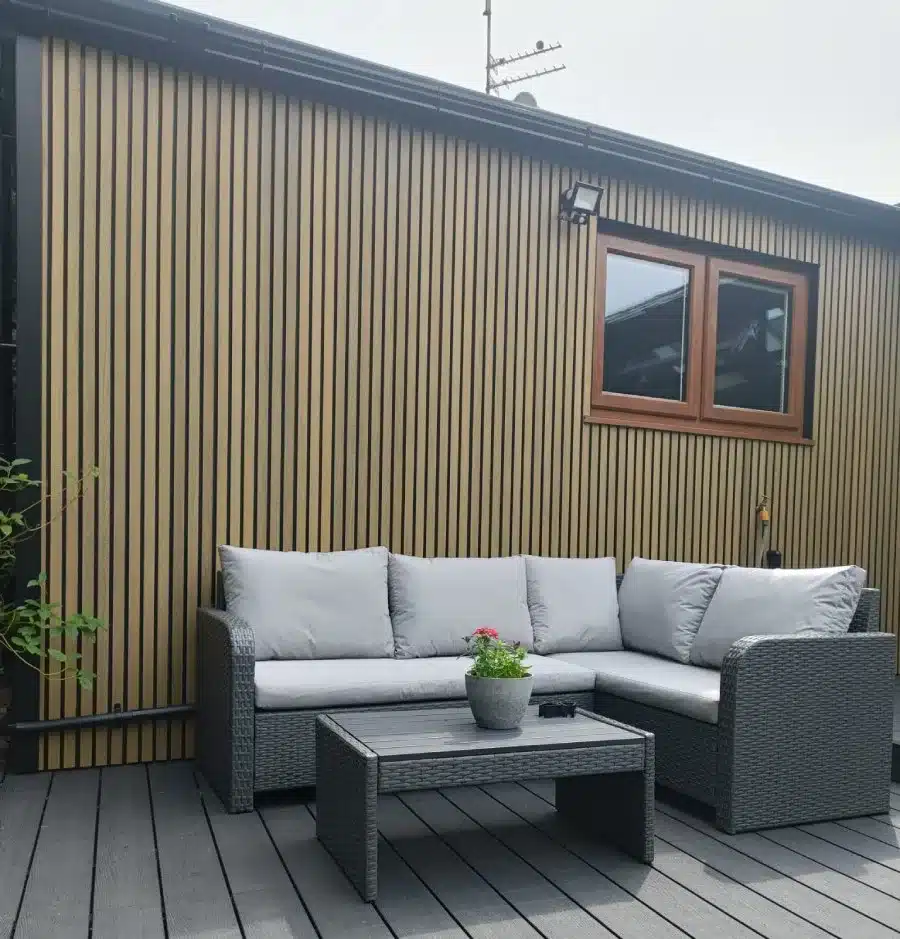
Welcome to our expert guide on getting the most out of your cladding’s decades-long lifespan! Here at Ultra Decking, we have years of experience in the trade, providing quality products and customer care when it matters most.
In this guide, we’ll cover everything you need to know to keep your home’s exterior composite cladding looking new and inviting. Our tips range from explaining the simple routine cleaning process to equipping you with the right tools to reach those pesky hidden spots with ease.
Before we get into the thick of things, it is important we highlight a common misconception often held about composite products:
‘Composite products are “Low Maintenance”—Not “No Maintenance”.’
It is true that cladding requires much less investment than composite decking; however, when exposed to the outside, the elements will have their way. Left unattended, dust, pollen, and dirt will accumulate on the surface, tarnishing the vibrancy of your cladding’s colour. Do not be alarmed by this; it is easily fixed.
Let’s jump into a brief comparison first, explaining the key differences between the two variations of cladding on the market:
Section 1: Capped vs. Uncapped – How Do They Compare?
Just as you’d find with our composite decking ranges, the level of care for your composite slightly differs between these two variants.
1st Generation Boards: Uncapped Composite
Composite products are composed of a mixture of recycled plastic (HDPE) and wood fibres. This composition provides low moisture absorption and strong UV resistance.
- The Reality (Unprotected): Because the outer wood-fibre surface texture is still exposed to the elements, surface moisture can attract mould and algae growth, staining your lovely new boards with grime.
- The Routine: Cleaning your boards twice a year (we advise Spring and Autumn) is sufficient to keep your cladding in optimum condition. If the surrounding area is particularly damp or near large trees, watch for green or black spots, as these are early signs of algae.
2nd Generation Boards: Capped Composite
- The Reality (The Stain Shield): Capped Composite products are protected by a thin, plastic shield known as the ‘Cap’. This extra layer provides incredible stain resistance and drastically reduced water absorption, making it incredibly hard for grime to settle and allowing you to wipe away stains with ease.
- The Routine: A simple clean once a year is usually enough to retain your capped cladding’s shimmering finish and cast away pesky cobwebs.
Section 2: The High-Reach Routine Clean
Unfortunately for cladding, a swift sweep with a broom (as you’d do with composite decking) won’t quite cut it. Because you are working vertically, often above eye level and out of reach, working safely and using the right tools is your ticket to an easy clean.
Required Tools:
- Extendable Water-Fed Soft Bristle Brush: This connects directly to your hose. It removes the need for a ladder, keeping you firmly rooted to the ground and away from risk.
- Household Washing Up Liquid: This is enough for most cases (or a dedicated composite cleaner for thicker stains).
- Pressure Washer: (Optional, but use with extreme care).
Section 3: Removing Stubborn Stains and Restoration
Not every stain is tackled by a quick wash. Below are our specific tips for handling unique situations:
Mould and Algae (A Simple DIY Fix)
Mouldy black spots or green algae splotches are common in areas of heavy shade and high moisture.
- The Method: Use equal parts water and baking soda to form a paste, or apply 5–8% white vinegar to the affected spot. Knead the area gently with a soft bristle brush, then wash with water.
- Top Tip: For increased effectiveness on stubborn spots, leave the vinegar to sit for at least an hour. For larger stains, opt for a dedicated cleaner (like Owatrol Compo-Clean), which lifts grease without damaging the plastic.
Restoring Uncapped Colours
Has years of weathering made your uncapped cladding look tired?
- The Method: Try applying a colour reviver such as Owatrol Compo-Care. These products are designed specifically for uncapped composite to help your original colour shine through once more.
- IMPORTANT: Do NOT apply stains or revivers to Capped cladding without checking with the supplier first! Capped cladding is non-porous; the product will not absorb and will leave a sticky mess on your wall.
Wish Away Watermarks (Oxalic Acid for Uncapped Boards)
Watermarks (appearing as light or dark streaks) are a common occurrence with smooth-finish composite cladding in the first few months. Rainwater causes natural tannins and oils locked within the wood fibres to seep out onto the surface.
These usually wash away naturally over 6–8 weeks, but if you wish to proactively remove them for peace of mind, Oxalic Acid is highly effective.
Expert Warning: This method will not work on Capped Composite. For Capped boards, simply use warm soapy water.
Safety Notice: Oxalic Acid is a skin, eye, and airway irritant. Use rubber gloves, goggles, and a facemask.
The Method:
- Mix roughly 1-2 tablespoons of Oxalic Acid Crystals into a cup of hot water until dissolved.
- Using an old sponge, apply the warm mixture directly onto the watermarks.
- Allow 10 to 60 minutes for the solution to sit and break down the tannins. Do not let the acid dry completely, as this can create harder-to-remove “tide marks.” Reapply if it dries too quickly.
- Mix cold water and baking soda and apply it to the area. This is a crucial step to neutralize the acid and stop the chemical reaction.
- Rinse thoroughly with water, allow to dry for 24 hours, and give it a final wipe with soap and water.
Section 4: AVOIDING COSTLY MISTAKES!
Composite material is resilient, but it isn’t invincible! Never apply these to your cladding:
- Bleach: Under no circumstances. Bleach attacks the wood fibres and damages the plastic cap. It strips the colour pigment right out of the surface, leaving permanent white patches.
- Abrasive Scrubbers: Wire wool, scouring pads, and “Magic Erasers” are massive no-nos. They act like sandpaper and will permanently shred and dull your woodgrain finish.
- High-Pressure Blasts: Keep pressure washers on a wide-spray pattern and stay at least 30cm away from the wall.
Section 5: Weathering Winter Storms
Cladding shields your household from the worst of the weather. Keep an eye on it after heavy rain, snow, or storms:
- Debris: High winds can cast heavy branches against your walls. Inspect for impact damage.
Check the Airflow: Drifts of snow and blown leaves can block the vital ventilation gap near the bottom of the wall. This gap is integral for providing airflow behind your cladding.
Conclusion
It is worth noting that while composite cladding is a highly enhanced version of traditional wood, it is a “low-maintenance” solution, not a “no-maintenance” one.
Because cladding is installed vertically, gravity naturally supports drainage, meaning it requires significantly less upkeep than a flat decking surface where water tends to sit and pool. However, the exact level of care depends on the type of board you choose. In our personal experience, maintaining a simple routine of cleaning your boards just once or twice a year perfectly supports and preserves their visual appearance over the decades.
Uncapped composite cladding boards benefit from a bi-annual clean (twice a year) to prevent organic buildup in the exposed wood fibres, whereas shielded capped cladding usually only requires a quick annual wash.
Ultimately, paying this small amount of kindness to your exterior is a tiny price to pay for the fresh, high-end, timber look it will provide for years to come.


 Previous Article