


 Previous Article
Is Composite Decking Waterproof? A UK Engineer's Guide (2026)
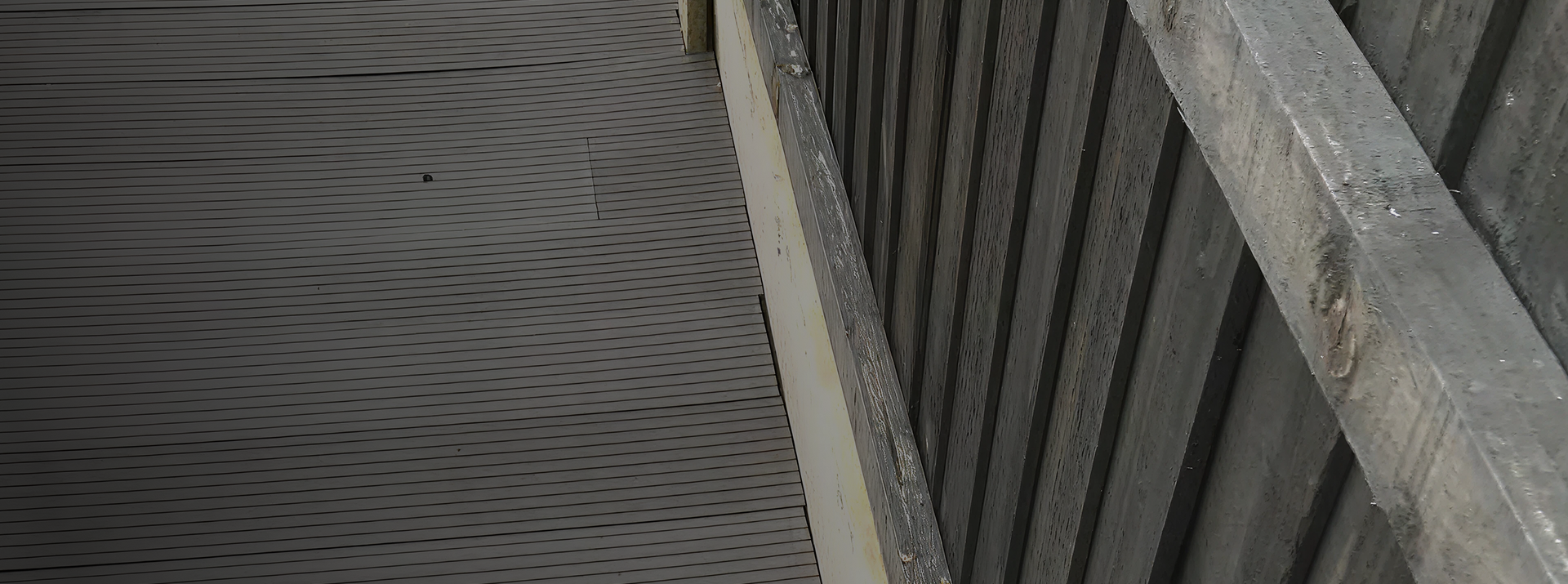
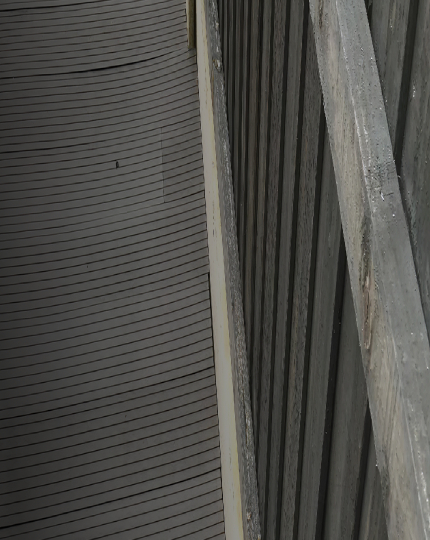
Does composite decking expand? The short answer is yes.
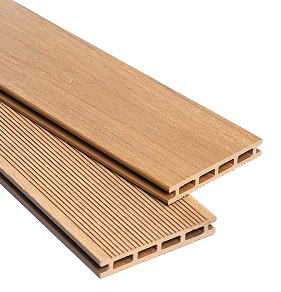
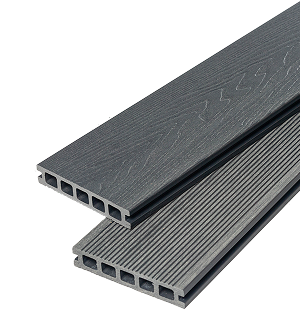
The reason for this is simple: Composite decking is made from a mix of recycled HDPE plastic and wood fibres. Like most plastic-based materials, these boards undergo thermal expansion—expanding in the heat and contracting in the cold.
While a seamless, no-gap look might be visually appealing on day one, it leaves no room for this seasonal movement. Without the correct gaps, the boards will push against each other, leading to lifting, warping, or even splitting.
As an design & developer engineer, I cannot stress this enough: Understanding decking installation with the correct expansion gaps is the single most critical factor in your deck’s longevity.
Expert Tip: If composite decking is not installed according to the manufacturer’s guidelines for expansion gaps, it will almost certainly invalidate the warranty.
On this page, we’ll walk you through the recommended expansion gaps, explain why they are so important, and provide expert tips on how to fix warped boards if this has already occurred.
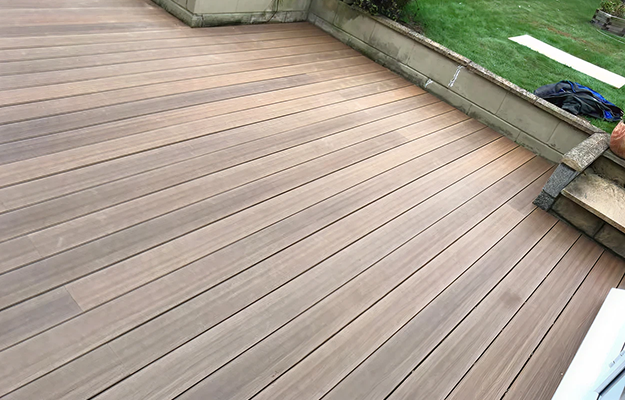

Before we detail the required gaps, it’s important to note that these are our recommendations based on our products. We make this clear because, over years of designing and developing composite materials, we know that expansion rates can differ depending on the quality of the supplier’s decking.
Another key point is to understand the type of composite decking you are installing. Capped and uncapped boards have different expansion rates. For example, based on EN15534 linear thermal expansion testing:
As you can see, the specific board and supplier you choose matters. Wherever you purchase your composite decking, ensure you ask the supplier for their product’s recommended expansion rates.
| Gap Location | Required Minimum Spacing | Key Purpose |
|---|---|---|
| Gap Location | 6mm (Capped) / 8mm (Uncapped) | Prevents boards from warping, lifting, and splitting at the ends. |
| Side-to-Side (Width) | 3mm | Allows for drainage and sideways expansion. |
| Against a Solid Wall | 15-20mm | Critical: Cheaper boards expand significantly more and are even known to push against brickwork with force. |
| On Angled Cuts (Mitre Joint) | 6mm | Allows for movement on diagonal or picture-frame joints. |
Why we recommend a larger Wall Gap: You may see other guides recommending small 10mm gaps against walls. However, experience has taught us that lower-density composite boards can expand aggressively in the UK summer.
Our Advice: It is safer to leave a 20mm gap and cover it with a wide 50mm L-Corner profile than to leave a tight gap and have your deck buckle against your house. Always prioritise expansion space over aesthetics—you can hide a gap, but you can’t fix a buckled deck.
For a truly professional installation, you can adjust the end-to-end gaps based on the ambient temperature when you are fitting the boards. As the boards will be expanded in hot weather and contracted in cold weather, adjusting the gap size accordingly is an expert-level technique.
Our recommended end-to-end gaps based on temperature are:
Understanding what plays a role in the movement of composite decking will give you valuable insight before you make your purchase and during installation.
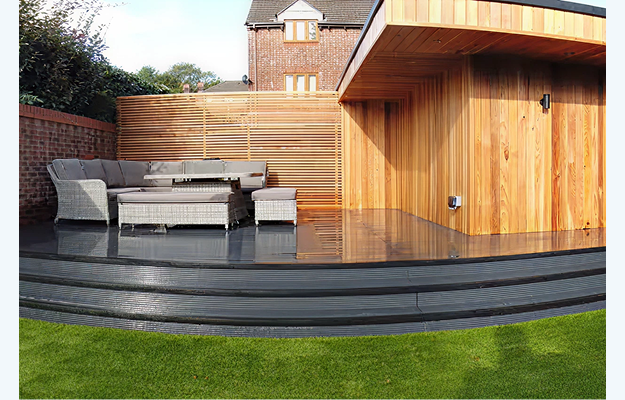
Due to its composition, composite decking experiences thermal expansion. Higher temperatures will cause a slight increase in the board’s length and width.
Your chosen colour also affects the expansion rate. Darker colours absorb more heat from the sun, leading to slightly higher expansion rates compared to lighter-coloured boards. This is an important factor for decking that is in direct sunlight all day.
If your planned decking area has no natural shade, consider implementing shade design ideas into your garden, such as a pergola, large umbrella, or hanging parasol.
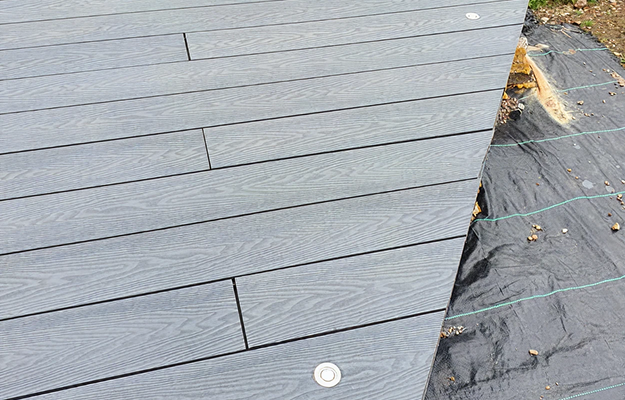
So, what happens if you ignore the rules? The answer is simple: the boards will eventually lift, warp, or crack. This damage can occur within six months or take several years, but in most cases, the effects are irreversible.
When the correct gaps are not left, pressure builds up as the boards have nowhere to move when exposed to heat. This creates immense stress on the boards and fixings, increasing the likelihood of warping, bending, and splitting.
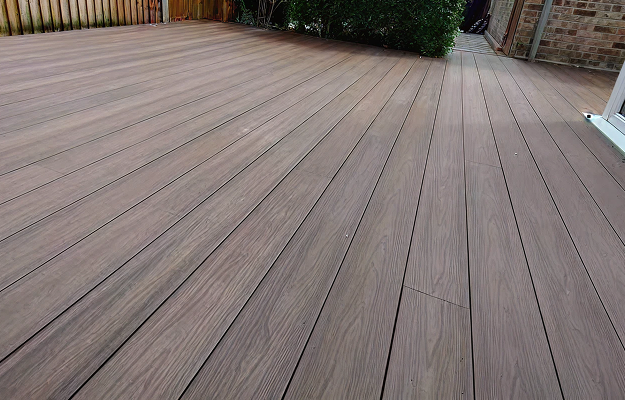
If you see that your boards do not have the required 6-8mm end gaps, 3mm side gaps, or 15-20mm gap against fixed objects, call your fitter immediately or re-install the boards yourself.
You may notice in the summer that there is no visible gap between your boards—they are touching and pushing against each other. Again, the best course of action is to have them re-installed. This needs to be performed immediately, but will save you thousands in future replacement costs.
If some boards have already warped, you may be able to fix them. If only a board or two is damaged, you can likely replace them yourself. However, if most of the decking is warped, you will need professional assistance and may have to replace the entire decking.
If you only have a few warped boards, you will need to replace each one individually. The method for this depends on the type of fixing clips used.
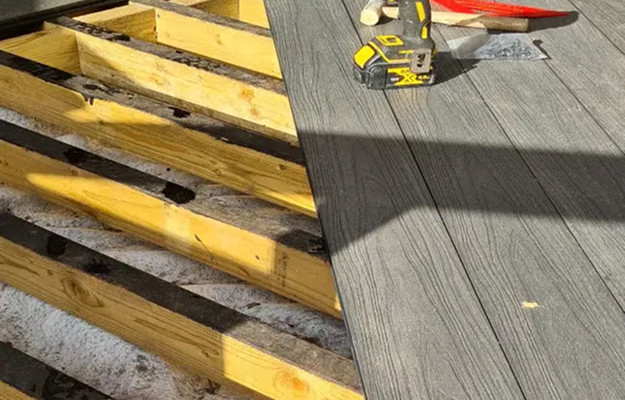
T-clips are screwed into the joist between the boards. Their main advantage is that they allow you to access and unscrew the clips to remove a single board without disturbing the whole deck. This means if you have a damaged board in the middle of your project, you can replace it with relative ease compared to hidden metal fasteners.
This is not the case if your boards were installed with metal hidden fasteners. Due to their interlocking design, you cannot simply pull up an individual board. To replace a warped board in the middle of the project, you must start at the edge of the decking and remove all the boards until you reach the damaged one.
This is why we strongly recommend ensuring your decking is installed correctly the first time to avoid significant future costs and effort.
Composite decking does expand—this is a simple law of material science. Understanding the type of board you have and speaking with your supplier before installation is crucial to getting the correct gap measurements.
By respecting this natural movement and following the recommended spacing rules, you ensure that the forces of nature work with your deck, not against it. This is the key to a professional, safe, and durable installation that will last for decades.
 Previous Article
Is Composite Decking Waterproof? A UK Engineer's Guide (2026)

Is Composite Decking Slippery When Wet? A UK Expert's Guide
