


 Previous Article
How Stain-Resistant is Composite Decking? An Engineer's Guide
When planning a garden renovation, the biggest debate is always: Traditional Wood or Modern Composite?
This is a common question customers have asked us for numerous years. Many homeowners are not fully aware of the benefits composite offers over timber. There is no doubt that wood is cheaper upfront, more authentic, and a classic choice. So, how much better really is composite decking, and is it worth the extra cost?
With almost a decade specialising in composite materials, we compare the two side-by-side to see the real difference. We will look past the marketing and focus on the factors that actually matter to you when planning your decking: Longevity, Stability, Safety, and the True Long-Term Cost.
Is it the right investment for your home? Let’s find out, starting with maintenance.
While all decking needs some basic cleaning, the level of ongoing maintenance is the single biggest difference between wood and composite.
Wood requires a lot of maintenance and specialist chemical treatments to stop it from warping, cracking, and rotting. To keep it in good condition, you must commit to an annual cycle of labour-intensive tasks, including:
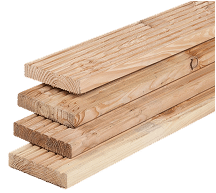
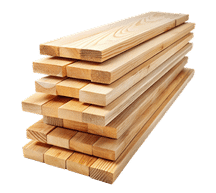

A new deck is a big investment, so its strength and how long it will last are critical.
In terms of initial strength, both high-quality wood and composite are excellent. A typical board can withstand a huge amount of weight (measured in MPa). The real difference in durability appears over time as the materials are exposed to the UK’s wet weather.
Composite: High-quality composite decking is designed to last for 25 years or more. Capped composite boards, with their protective outer layer, offer the best resilience and will not need replacing due to rot.
Expert Point: While all these options are incredibly strong when first installed, the real test of durability comes after years of exposure to the UK’s wet weather, and composite is much better at retaining its strength over the years.

|
Strength (1 year) | Strength (10 years) | Strength (15 years) |
|---|---|---|---|
| Wood | Good (34–45 MPa) | Poor (Weakens over time) | Extremely Poor (Needs Replacing) |
| Hardwood | Best (51+ MPa) | Good (Loses some strength) | Good (Loses some strength) |
| Composite | Good (34–46 MPa) | Excellent (Consistent) | Very Good (Loses some strength) |
While nothing beats the real version for authenticity, modern composites are now extremely close. The key is knowing the difference between a cheap, artificial-looking board and a modern, high-quality one.
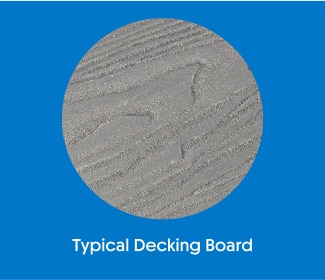
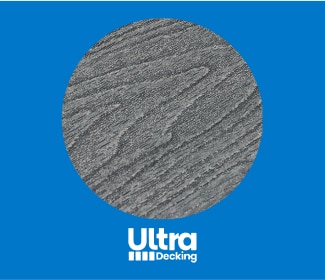
This is another important feature. Customers are often concerned about slippery boards, especially if they have children or pets. Wood is known for being slippery, especially in wet conditions..
Composite decking: Modern composite offers improved slip resistance. While standard woodgrain boards average a PTV score of 34-36 (Good), our high-performance Grooved Boards achieve an excellent 45+ PTV, significantly outperforming wood in wet conditions.
Wood decking: is extremely slippery and hazardous. This is mainly due to the growth of algae and moss, which needs to be regularly treated to stay under control. These treatments can cost time and money. As wood ages and if softwood and hardwood are not maintained correctly, they can become very slippery.
Please note: PTV is an industry related testing on performance to slip resistance, anything above 36+ is consider low risk of slip and within industry in marked slip resistant in most cases.
Colour fading is another important feature usually researched and commonly asked about. Have you ever noticed that your decking is not as vibrant as it used to be? Or perhaps you noticed that some parts of the deck are different from the others. It is because of the colour fading, which can be caused by various reasons.
Wooden decking: Wood fades aggressively. Its colour consistency is poor and requires consist maintenance to retain and maintain its colour. Even though some woods hold their colour for longer, the result over time is, in most cases, the same: they turn a dull grey.
Composite decking: If you are one of the many customers that has upgraded to composite from wooden solutions, you will see that the colour consistency is much better. Composite decking does still fade, uncapped boards see the most and capped boards see extremely minimal colour change, even after several years. Uncapped boards as mentioned in our table, are the worse for colour change with composites, but even then they lighten around 30% but still maintain their original colour base being a grey or brown after several years. So even when comparing uncapped boards with wood the colour consistency is much better.
While softwood is cheaper to buy initially, composite decking provides a far better return on investment over its lifespan.
The Upfront Cost Softwood has the lowest initial purchase price. Uncapped composite is slightly more expensive, and hardwood and capped composite are premium products with a higher upfront cost.
Decking Cost Comparison: 15m² Area Over Time Please note: Costs below are estimates based on 2025 market prices. Maintenance costs factor in time at £13.50/hour and materials.
The True Cost Over 10 Years The initial price is only half the story. Wood requires a yearly budget for stains, sealants, and tools, not to mention the value of your time. As the table shows, when you factor in maintenance costs, capped composite becomes the cheaper option after just a few years. When you also consider that softwood may need a full replacement within 10 years, composite proves to be the most cost-effective choice in the long run.
|
|
Softwood | Hardwood | Uncapped Composite | Mixed Colour Composite | Capped Composite |
|---|---|---|---|---|---|
| Initial Cost | £1,232.00 | £2,400 | £1,427.78 | £1,555.90 | £1,714.59 |
| 5 Year Cost | £2,559.50 | £3727.50 | £2237.78 | £2365.90 | £1984.59 |
| 10 Year Cost | £3944.00 | £5028.00 | £3047.78 | £3175.90 | £2254.59 |
| The Verdict | Expensive Maintenance Trap | High Luxury Cost | Good Value | Good Value |
 |
When considering your investment, looking at the long-term performance is key. While softwood is cheaper upfront, it often needs replacing 2-3 times over a 15-year period, bringing its true total cost to over £5,200. A well-maintained hardwood deck will last the duration but can cost over £6,300 when factoring in years of maintenance.
In contrast, even uncapped composite decking boards will still be structurally sound after 15 years. A high-quality capped composite board, with a total estimated cost of around £3,800, offers by far the best long-term performance and value.
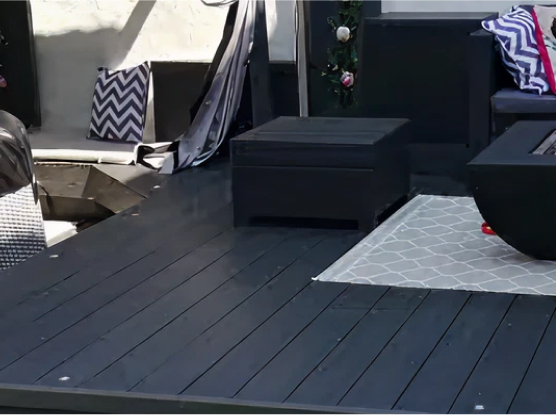
The table below shows what you can expect from each material over time in appearance.

|
|
Wood | Hardwood | Uncapped Composite | Mixed Colour Composite | Capped Composite |
|---|---|---|---|---|---|
| After 5 Years | 🔴 FAILED Can show signs of rot; may require full replacement if unmaintained. | 🟡 GOOD Colour is fading; structure is still good with maintenance. | 🟡 GOOD Slightly faded but structurally solid. | 🟡 GOOD Colour has faded but is stable; structurally solid. | 🟢 BEST Colour is stable; structurally perfect. |
| After 15 Years | 🔴 FAILED Will likely have been replaced at least twice. | 🟡 AT RISK Severely weathered; high risk of rot. May need replacement. | 🟡 AT RISK Visibly faded; may be nearing end of life. | 🟡 WORN weathered; may be nearing end of life. | 🟢 BEST Noticeably worn but still structurally perfect. |
 Previous Article
How Stain-Resistant is Composite Decking? An Engineer's Guide

A UK Homeowner's Guide to Replacing Wood Decking with Composite (2025)
