


 Previous Article
The Ultimate UK Guide to Decking Screws, Nails & Fasteners (2026)
Choosing the right outdoor flooring is the most important decision you’ll make for your garden design. The material you lay down has the power to elevate and enhance your entire landscape.
Having supported customers for over a decade when it comes to selecting outdoor materials, I know this choice depends on numerous factors—from design and budget to the specific safety needs of your family.
For me personally, decking is the clear winner because it provides warmth and acts as a seamless extension of your home. However, paving is currently a huge trend for 2026, offering modern enhancements and stunning porcelain options.
Ultimately, like any home improvement, the “best” choice depends entirely on your personal requirements. In this guide, we will compare all the main options to help you make a confident decision.
Need a quick answer? Use the clickable menu below or see our ‘At a Glance’ table for a rapid summary.

|
Avg. Cost (per m²) | Avg. Lifespan | Maintenance Level | Best For… |
|---|---|---|---|---|
| Wood Decking | £20-80 | 5–15 Years | Very High | The lowest possible upfront cost. |
| Paving Slabs | £ 18-90 | 25+ Years | Medium | A hard, durable, and traditional patio surface. |
| Composite Decking | £37-80+ | 25+ Years | Very Low | The best all-around balance of cost, performance, and aesthetics. |
| PVC-ASA Decking | £80-120 | 25+ Years | Very Low | Ultimate weather and UV resistance. |
| Aluminium Decking | £120+ | 30+ Years | Very Low | Maximum strength & commercial-grade durability. |
Wood decking is most certainly one of the most popular outdoor flooring materials on the market today. Wood comes in various options: hardwood, softwood and pressure treated. Let’s explore the wood types on offer in the U.K. at present
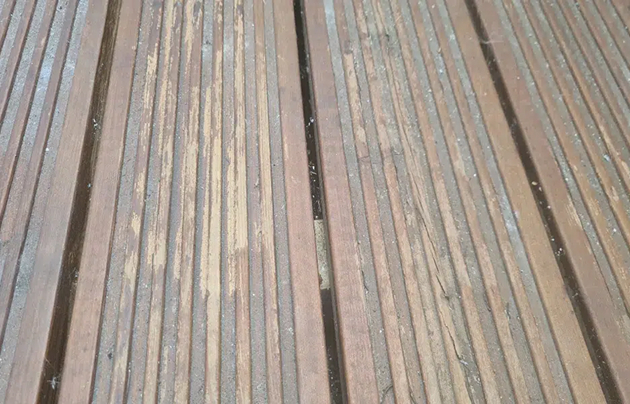
Softwoods have a much shorter service life in comparison to most other outdoor materials. This is due to the fact they are less durable and more susceptible to moisture damage, such as rotting and warping. However, they remain popular with consumers due to the low cost, as softwood is the most accessible material out of any on the market today.
The most commonly used for outdoor garden in U.K. is Pressure-treated wood, these boards have been treated using chemicals in order to extend its lifespan and protect the boards from damage.
Pine is one of the most common types of softwoods used for decking. It’s also among the cheapest varieties you can find for decking. Pine boards usually tend to have lighter shades, like yellow, turning slightly darker as they age.
Verdict:Perfect for a short term project
There are many varieties of Redwoods. European Redwood, is the most common for decking material, is one of the most durable softwoods, more so than Cedar. It can resist moisture, rotting, and insects, helping it to last longer.
Cedar offers many benefits when used for decking. It’s durable, naturally moisture-resistant and long-lasting. Due to its natural properties, it is resistant to insects and rot. It is also stable, making it resistant to warping, splitting, and bending. Cedar often comes in strong and dark-coloured shades, perfect for rustic and natural design aesthetics. As Cedar ages, it will slowly turn grey unless sealed and stained.
Verdict:Perfect for rustic and natural design aesthetics, a perfect blend between increase hardwood durability and resistance, but still at an affordable.
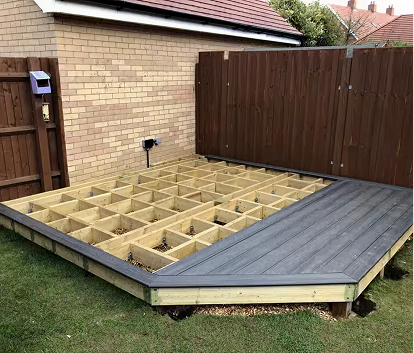
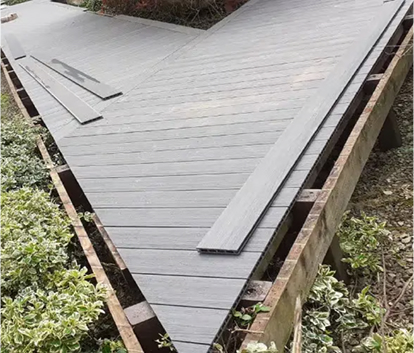
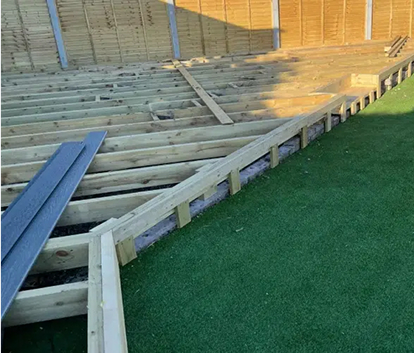
During the pressure treatment of wood manufacturers frequently used Chromate Copper Arsenate as a preservative. When exposed to these chemicals, it can present a lot of risks. Arsenic, was one of its main chemical components used during the pressure treatment of wood which is highly toxic to humans and animals, this is why it was banned in 2006. As of today the commonly used chemicals are Alkaline Copper Quaternary (ACQ) and propiconazole, making pressure treated wood today safe. PT and cedar are safe to use in home projects and children playgrounds projects. If safety is your concern, we would personally recommend cedar.
⚠️ Critical Safety Warning: Disposal of Pressure Treated Wood Pressure-treated (PT) wood contains chemical preservatives (historically Arsenic, now Copper/ACQ).
NEVER Burn It: You must never burn old decking boards in a fire pit or bonfire. Doing so releases toxic chemicals into the air which are dangerous to inhale.
Disposal: PT wood is classified as hazardous waste in many areas. It must be disposed of at a local recycling centre that accepts treated timber. Do not bury it or mulch it.
Lowest Upfront Cost: For short term designs and projects the cheapest option on the market.
Natural Aesthetic: For design looking for authenticity you can match real timber.
High Maintenance: Requires annual sanding, staining, and sealing to prevent rot.
Short Lifespan: Great for short term projects looking for natural appearance for 2-5 years and max durability 5-10 years.
Safety Hazards: Prone to splinters and later stages prone to slipping due to algae build up.
The second classification of lumber is hardwood. Hardwood decking is much more durable than softwood decking. However, unlike softwoods, they are much rarer and come from slow-growing trees. Because of this, they are more expensive than softwood. Like softwoods, there are a variety of hardwoods that you can choose from. Let’s take a look a some of the options available today:
Teak is famous for its exceptional durability. Its dense grain and high natural oil content make it incredibly resistant to rot and insect attack. However, it is significantly sought after and more expensive than most hardwood
Verdict: considered the gold standard of hardwoods, due to this its comes with a premier price tag
Oak is one of the most popular hardwoods for decking due to its strength and moisture resistance. It’s also one of the most cost-efficient hardwood decking options. Oak typically comes in two varieties: red and white oak.
Verdict: Perfect for rustic and natural design aesthetics, a perfect blend between increased hardwood durability and resistance, but still at an affordable.
Expert Tip: For the enhanced visual appeal and performance, ensure you are always sourcing high-quality White Oak, Red Oak absorbs water easily.
Often called “Ironwood” for a reason, Ipe (pronounced ee-pay) is widely considered one of the best and most durable decking materials in the world. It is an incredibly dense tropical hardwood, making it exceptionally resistant to scratches, moisture, insects, and rot.
Cumaru is one of the hardest, densest, most durable, and longest-lasting hardwoods you can use. It’s scratch, fire, and moisture resistant. It also has a high resistance to rotting and insects.
Expert Tip: If it’s the ultimate preference in hardwood you’re searching for, Cumaru is nearly as durability as IPE & more competitively priced currently. These are also currently rate as fire rated A but ensure you check if this is a key purchasing decision with the supplier
Key Features: Ipe’s performance is second to none. It boasts claims of Class A fire rating, meaning it is as flame-resistant as steel, and its extreme hardness means a properly maintained deck can last for 50 years or more.
The Pinnacle of Aesthetics: In my personal view, nothing beats the "real thing." Hardwoods offer a unique mix of rich colours and complex grain patterns that every synthetic board tries to mimic.
Natural Durability: Unlike softwood, species like Ipe and Cumaru have natural oils that make them resistant to rot, moisture, and insect attacks.
Fire Resistance: Some premium hardwoods (like Ipe) are so dense they carry a Class A fire rating—the same as concrete or steel—without needing chemical treatment. Note: check before purchasing if this is key.
High Upfront Cost: Prices typically start well over £90 per m² for quality boards.
Mandatory Maintenance: To retain that "showroom" colour, you must oil the deck annually. Without this, even the most expensive hardwood will fade to silver-grey within 12 months.
Difficult Installation: You must pre-drill every single hole due to the wood density, increasing labour costs.
PVC is a synthetic outdoor material option created using a PVC core and an ASA (acrylic-styrene-acrylonitrile) shell. It’s known for being highly durable and resilient against weathering.
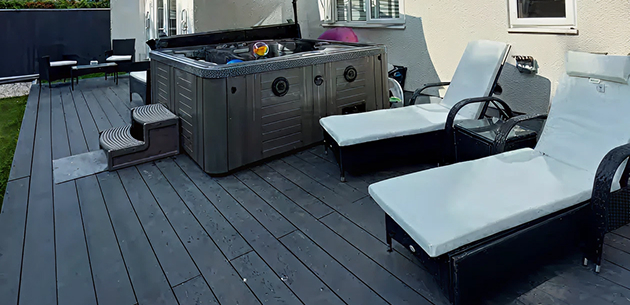
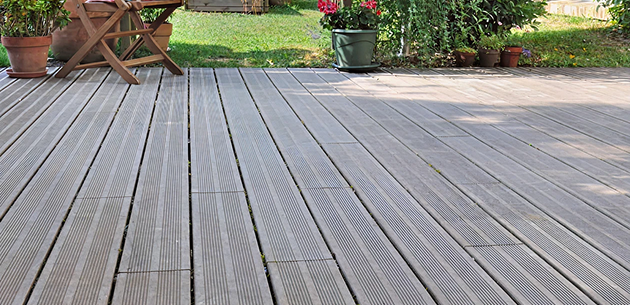
Exceptional Durability: PVC-ASA material can last for decades, making it an ideal choice for homeowners who don’t have the time for the annual painting and staining required for wood.
Elite Performance: In our experience, if elite UV & scratch resistance along with effortless care is your main goal, then PVC-ASA is the solution.
Cost: The cost of PVC varies, but it is more expensive than wood and most composite. If budget is your main priority, then PVC might not be the best option for you.
Environmental Impact: A drawback to PVC is that it isn't environmentally friendly during or after production, meaning recycling this material can be challenging over time.
Artificial Appearance: In all honesty, this is the main reason PVC lacks in popularity. Even though PVC-ASA has taken huge leaps in authenticity, some do still feel they look artificial. Personally speaking, they can look very authentic, but often more like an indoor floor.
Our Expert Verdict: Our advice is this: if your number one priority is elite technical performance (UV and scratch resistance) and you are happy with both the higher price and a more modern, less traditional look, PVC-ASA should be your chosen solution. For most homeowners, we find high-quality capped composite offers a better balance of natural aesthetics and overall value.
This type of decking is mainly constructed of complete HDPE (High-Density Polyethylene). These boards are extremely resilient and can withstand huge amounts of pressure.
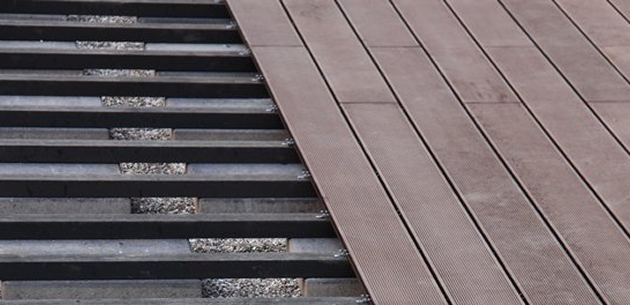
Exceptional Strength & Durability: To give you an idea of their strength, be sure to have a few more blades ready when you cut them to size, due to their increased density.
Ultra-Long Lifespan: Due to their HDPE construction, they can last well beyond 30 years and are effortless to maintain
Eco-Friendly Option: In a lot of cases, they are environmentally friendly because they use completely recycled HDPE plastic, but it's always best to check with your supplier.
Unnatural Appearance: The main drawback of HDPE is its synthetic, plastic look. Many homeowners feel it doesn't compliment a natural garden landscape and can sometimes look "cheap".
Our Expert Verdict: For heavy-duty commercial projects where function is the only factor, HDPE is a solid choice. For most homes, however, its unnatural appearance makes composite or PVC-ASA a better-looking alternative.
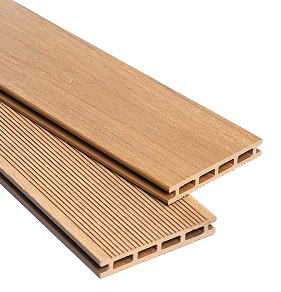
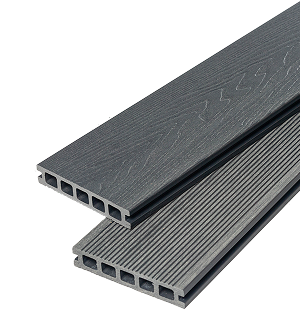
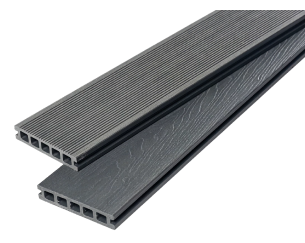
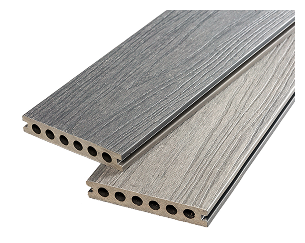
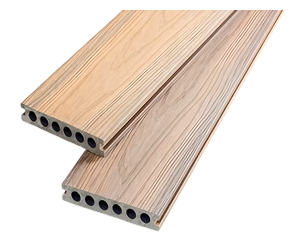
Composite decking, made from a smart mixture of reclaimed wood fibres and recycled plastics, is rising considerably in popularity across the UK. It’s designed to give homeowners the best of both worlds, solving the biggest problems of traditional timber.
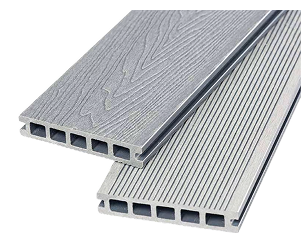
The Key Benefits
In our experience, this is why customers love composite. It has the lifespan and durability of a synthetic material but retains that natural wood aesthetic.
A high-quality, low-maintenance composite deck is a huge selling point for potential buyers and can help increase the resale value of your property.
Forget the annual sanding, sealing, and painting. To keep your composite decking looking great for decades, all that’s needed is a simple, regular clean.
While the initial upfront cost is slightly higher than softwood, it is an investment into your home. You will spend far less money over time on maintenance, repairs, and costly replacements.
Our Expert Verdict: Due to its many benefits, we personally rate composite as the one of the best outdoor flooring option for most UK homes. It’s aesthetically pleasing, incredibly long-lasting, and successfully combines the best properties of both wood and plastic. Ultimately, choosing the right board is key to the benefits you will obtain throughout the years.
Now that we have covered the headline benefits, let’s look at some specific practical advantages—and the critical drawbacks—based on years of customer feedback.
Family & Pet Safe (Splinter-Free): Unlike traditional timber, which is renowned for splintering over the years (especially if untreated), composite decking will never splinter. This makes it the safest option for children’s bare feet and pets' paws.
Fade & Stain Resistance: Note: Ensure you opt for Capped Composite for this benefit. Produced with a thin protective plastic(shield), these boards have low moisture absorption. This enables red wine or grease spills to be simply wiped away while retaining colour consistency for decades
Eco-Friendly: In most cases, composite is made with over 90% recycled materials (reclaimed wood fibres and recycled plastics). You can rest assured that by choosing composite, you are contributing to a recycled environment rather than cutting down fresh forests.
Expansion & Contraction: In my experience, this is not discussed often enough. Unlike wood which dries and shrinks, composite expands in the heat. You must leave the correct expansion gaps at the ends of boards—never "butt joint" them tight, or they will buckle in the summer sun.
Heat Retention: Composite decking can get hot in direct sunlight—typically slightly hotter than timber. If your deck is south-facing, I recommend opting for a lighter colour to mitigate this.
Initial Cost: Depending on the type (Capped vs. Uncapped), the long-term benefits do come with a higher initial price tag than pressure-treated wood.
A common favourite with homeowners for decades and currently trending heavily in garden design for 2026/27. Paving is a cost-effective and hardwearing solution for any outdoor patio, available in a variety of designs and colours—from traditional sandstone to contemporary grey slabs—creating a modern, elevated garden aesthetic.
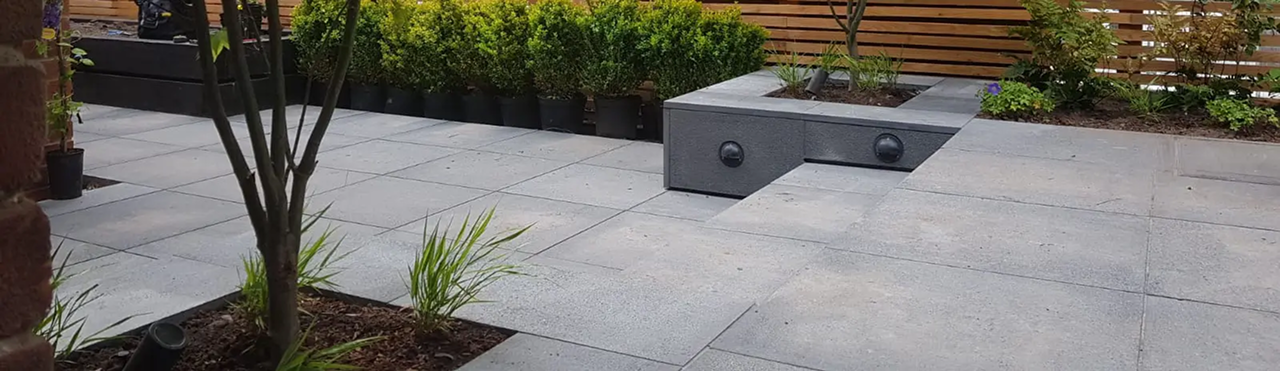
Durable & Long-Lasting: Paving is renowned for its resistance to natural outdoor elements. If maintained correctly, a paved patio can easily last well beyond 25 years.
Options for Any Budget: The price range is extremely broad (£18 - £90+ per m²), meaning you can find a paving type suitable for almost any project budget, from economy utility slabs to luxury porcelain.
Can Crack Easily: While strong, if installed incorrectly (e.g., on an uneven sub-base), paving slabs can be prone to cracking. Replacing a single cracked slab is often a difficult and time-consuming repair.
Ongoing Maintenance: It is not a "fit and forget" solution. The joints (grouting) between slabs need to be maintained or replaced as they weather. Additionally, many paving types (especially natural stone) require regular cleaning and sealing to prevent staining and moss growth.
The "Concrete" Aesthetic: In our experience, the main downfall for many homeowners is the "feel." Paving often has a hard, cold appearance, whereas composite or timber offers a much warmer, more natural feel underfoot.
Our Expert Verdict:
Paving is a solid, durable, and long-lasting solution, providing versatility in style, budget, and design for almost any project type. This versatility is a key reason why it has retained its popularity for so long.
The only drawback is the maintenance: in most cases, slabs need to be regularly sealed to ensure their visual appearance and performance.
However, there is one paving solution that stands out from the rest: Porcelain Paving. Available in modern contemporary colours that resist staining and moss far better than stone, porcelain can elevate a garden significantly and should be a serious consideration for any modern outdoor project.
Aluminium offers the ultimate in durability performance and longevity, it’s out of all the option the most hard wearing and long lasting, however due to cost its stops this from being a popular option among homeowners.
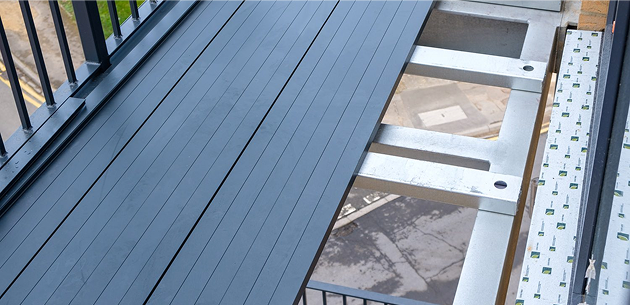
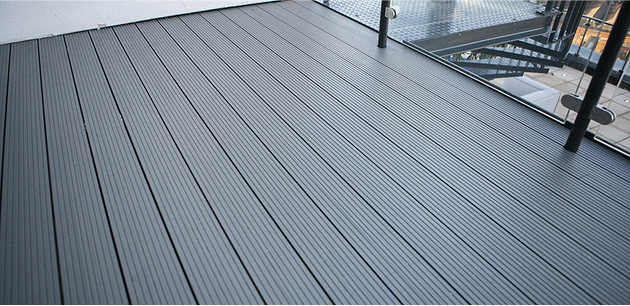
Ultimate Durability & Lifespan: Aluminium is one of the most durable and long-lasting flooring options available, with a lifespan that can easily exceed 30 years and beyond.
Ultimate Resistance: Resistance to moisture, rot, decay, cracking and rusting. Aluminium offer superior resistance compared to all options and is key reason why they outlast most materials and products.
Premium Price: It is one of the most expensive flooring options on the market.
Commercial Appearance: It provides a "commercial feel" to your garden with its metal appearance, which many homeowners find doesn't suit a residential landscape.
Gets Hot in Summer: As a metal, it conducts heat very well and can become uncomfortably hot to walk on during the summer months.
Our Expert Verdict: While its durability is impressive, the combination of a high price, a commercial look, and conduction of heat means that for most UK homeowners, aluminium is not the best flooring option compared to the other choices available.
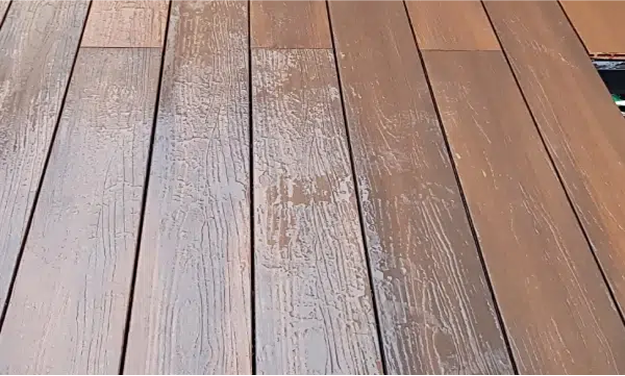
Elevating and upgrading your outdoor exterior is not exactly a cheap home improvement. Here in the UK, adding a medium-sized outside decking can run into thousands of pounds just for materials alone. Even more, depending on the quality of the materials. For this reason, many homeowners want to save as much money as possible by choosing the cheapest materials.
Naturally, it does not mean you have to compromise quality over cost. There are several affordable options from which you can choose. Let’s review all the options together to get a view.

|
Upfront Cost / m² (Materials) | Maintenance Level | Est. 10-Year True Cost | Best For… |
|---|---|---|---|---|
| Softwood Decking | £ 20-80 | Very High (Annual sealing/painting) | High | The absolute lowest initial budget. |
| Paving Slabs | £18-90 | Medium (Weeding, re-pointing, sealing) | Low -Medium | A durable, hard surface with many budget, elite & modern options. |
| Hardwood Decking | £80-120 | High (Requires annual oiling) | High | A premium, natural wood look with a larger budget. |
| Composite Decking | £33-70 | Very Low (Simple cleaning only) | Low | The best balance of upfront cost, looks, and long-term value. |
| PVC-ASA Decking | £80-120 | Very Low (Simple cleaning only) | Medium-High | A premium price for elite UV & scratch resistance. |
| Aluminium Decking | £120+ | Very Low (Simple cleaning only) | High | Commercial-grade strength where cost is not a factor. |
Appearance is one of the most important factors for UK homeowners. It’s crucial to consider not just how a material looks on the day it’s installed, but how it will look in 5 or 10 years’ time after exposure to the British weather.
|
|
Initial Look | Look After 5 Years | Best For… |
|---|---|---|---|
| Softwood Decking | Timeless, natural beauty. The "real thing." | Faded to a silver-grey colour. Can look tired and worn without annual staining/painting. | The absolute lowest initial budget. |
| Paving Slabs | A hard, functional surface. | Can look dated. Joints may have weeds or need re-pointing. | A durable, hard surface with many budget, elite & modern options. |
| Hardwood Decking | Unmatched natural beauty and rich colour. | Weathers to a distinguished silver-grey patina. Requires annual oiling to retain its original tones. | A premium, natural wood look with a larger budget. |
| Composite Decking | Authentic wood look or modern colours. | Colour has retained its core tone, just slightly lighter. Still looks new. | The best balance of upfront cost, looks, and long-term value. |
| PVC-ASA Decking | Clean, uniform, often like indoor flooring. | Colour is stable, but can look more artificial over time. | A premium price for elite UV & scratch resistance. |
| Aluminium Decking | Industrial, metallic, and commercial. | Unchanged. Still looks industrial. | Commercial-grade strength where cost is not a factor. |
Our Expert Verdict: In our experience, while nothing can be the “real thing” like exotic hardwood on day one, modern composite decking has taken huge leaps forward. With mixed colours and deep embossed grains, it does the best job of looking authentic year after year, without the inevitable fading and high maintenance that comes with all timber.
Durability refers to the ability of a material to withstand, wear, pressure, damage or determine how long a decking can last. Although there are many durable options such as composite decking, HDPE plastic boards , PVC and some exotic hardwoods – the most durable material of them all is aluminium decking.
|
|
Avg. Lifespan | Resistance to Rot & Insects | Key Durability Factor / Weakness |
|---|---|---|---|
| Softwood Decking | 5-15 Years | Poor | Highly susceptible to rot and insect damage without constant chemical treatment and maintenance. |
| Paving Slabs | 25+ Years | Immune | Prone to cracking from frost or impact. The sub-base can sink if not properly installed. |
| Hardwood Decking | 20-40 Years | Excellent | Still a natural material that will eventually weather. Can be scratched or dented. |
| Composite Decking | 25+ Years | Excellent | A robust, dense material that does not rot. Quality can vary by brand and generation (capped is best). |
| PVC-ASA Decking | 25+ Years | Immune | Can become brittle over time with extreme temperature changes. |
| Aluminium Decking | 30-50+ Years | Immune | The ultimate winner for longevity. Can be dented by sharp impacts, and is the most expensive. |
Our Expert Verdict: While aluminium is the most durable material available, offering superior resistance to almost anything that can be thrown at it, it’s only drawback is its high cost and commercial appearance mean it’s not for everyone
In our experience, every customer’s project and priorities are different. The “best” outdoor flooring material truly depends on what key benefits you value the most for your garden.
Then, as our durability tests show, Aluminium is the technical winner.
Then traditional Softwood Decking or basic Paving Slabs are the most cost effective options
Then Composite Decking is the most popular and cost-effective choice for most homeowners. It is both durable and long-lasting whilst providing the natural aesthetic of wood that customers desire. While the upfront cost is higher than timber, it is an investment that is worth it over time due to the minimal maintenance required.
 Previous Article
The Ultimate UK Guide to Decking Screws, Nails & Fasteners (2026)

Is Composite Decking Waterproof? A UK Engineer's Guide (2026)
