


 Previous Article
How To Build Your Decking Right: The Ultimate UK Guide
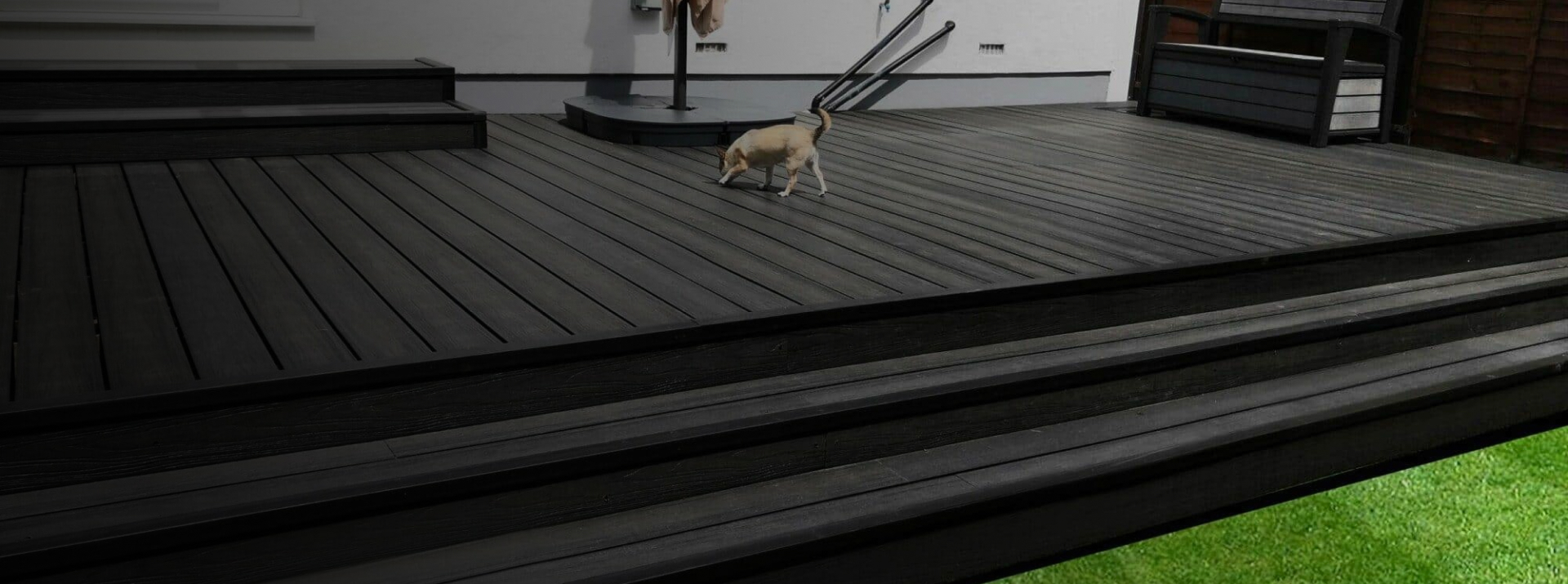
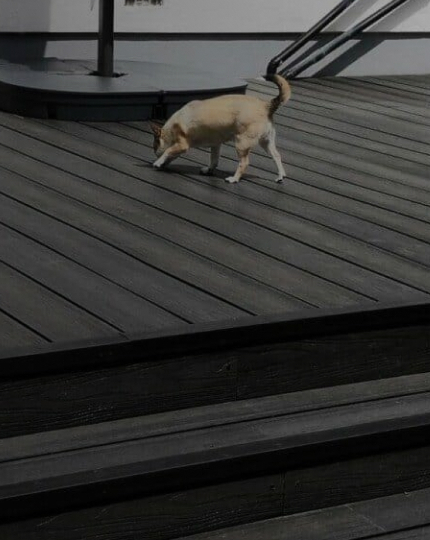

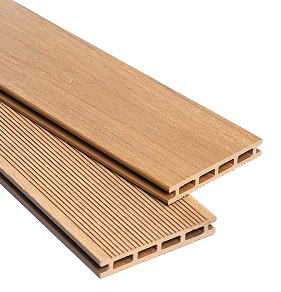
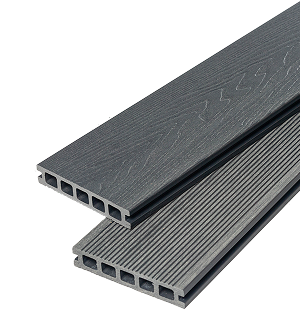
When planning your outdoor space and choosing the right outdoor flooring, one of the most important considerations for homeowners is slip resistance, and rightfully so. Traditional wood decking has a long-held reputation for becoming slippery, especially in our wet climate.
This has led many to ask: have the modern alternatives like composite and PVC decking solved this problem?
The answer is yes, but their performance does vary.
To provide a definitive answer, we need to look at the data. The industry standard for testing slip resistance is the Pendulum Test Value (PTV). The key information about PTV test results which you need to know is that a score of 36+ is considered a low slip risk.
Below, we will compare the slip resistance of each main decking type, based on our own internal testing and market data
| Decking Type | Typical PTV Score (Very Wet) | Slip Risk Classification |
|---|---|---|
| Composite (Grooved) | 45 | Low Risk |
| Composite (Wood Grain) | 34+ | Low to Medium Risk |
| PVC (New Generation) | 50+ (Estimated) | Very Low Risk |
| Wood (with Anti-Slip Strips) | 45+ | Low Risk |
| Wood (Standard) | 25-35 | Medium Risk |
| Plastic (HDPE) | Varies (often high risk) | Medium to High Risk |
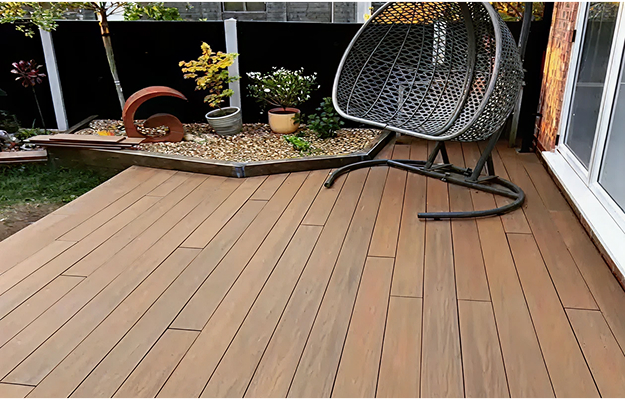
Modern composite decking offers good to excellent slip resistance right from installation. Its performance, however, depends on the surface finish.
Our Real-World “Stress Test” (2020) We don’t just rely on standard lab data. In 2020, we conducted our own rigorous internal testing using the industry-recognised SlipAlert method.
Crucially, we didn’t just dampen the boards like many standard tests do. We “overkilled” the test conditions, flooding the deck to simulate large rainfall—the kind of real-world weather UK homeowners actually face.
What does this mean? While a score of 36+ is the official “Low Risk” threshold, achieving a 34 in worst-case, flooded conditions demonstrates that the board offers reliable grip. In standard damp conditions, you could expect this performance to be even higher.
Expert Tip: The direction you lay your boards matters. For maximum slip resistance on a walkway, we recommend installing the boards so that the grooves or grain run perpendicular (across) your path of travel. This increases grip.
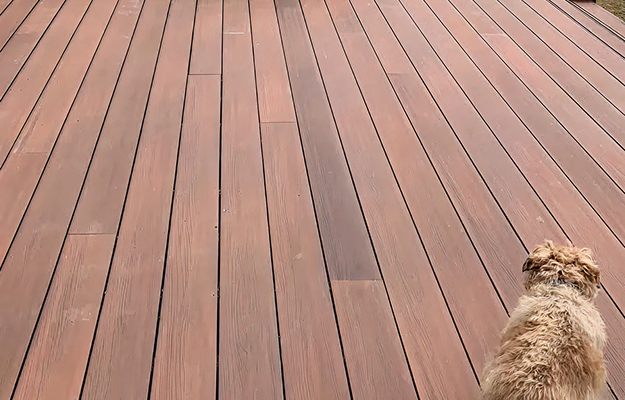
Standard wooden decking is well-known for becoming very slippery, especially when wet. This issue worsens significantly over time as moisture encourages the growth of microscopic algae and mould on the surface.
When wet, this algae forms a slime layer (known as biofilm) that further increases the risk of slipping, dropping the PTV score deep into the dangerous estimated range of 0-25.
A typical wooden deck generally sits in the medium-to-high risk range (0-35). While regular, intensive maintenance can help, it will always be a challenge. However, there is a solution:
Anti-Slip Strips: These are resin-and-aggregate strips that can be fitted into the grooves of timber boards. They vastly improve slip resistance, often achieving a PTV score of 45+, which is a great result.
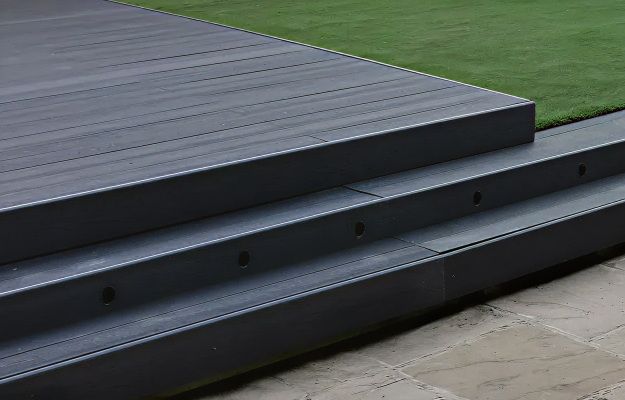
Historically, PVC decking had a smooth surface that wasn’t great in the wet. However, newer generation PVC decking, which is growing in popularity in the USA, has seen huge advancements.
Manufacturers like AZEK in the US report up to a 40% improvement in slip resistance compared to other composite products. This would give new-generation PVC an estimated PTV of 50 or higher, placing it firmly in the very low slip risk category.
Important Tip: As high-performance PVC is still relatively new to the UK market, specific PTV data can be limited. Always check with your supplier, as performance may vary between brands.
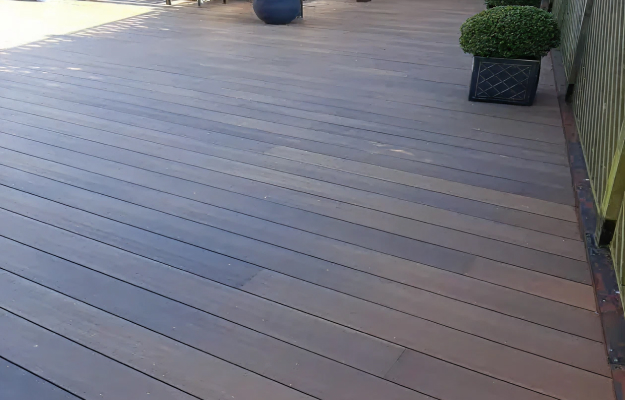
It’s important to distinguish PVC from generic, 100% HDPE plastic decking. While HDPE is extremely durable, it is often manufactured with a very smooth, non-textured coating. This makes it prone to being slippery when wet. While it won’t grow mould, its surface texture itself does not offer good grip.
If slip resistance is a primary factor in your decision, our recommendation is to choose either composite decking or new-generation PVC.
is a proven, tested material in the UK market. A grooved or textured composite board offers excellent, low-risk performance that is significantly safer than traditional wood.
appears to be the future market leader in slip resistance, with outstanding performance data coming from the US. However, a potential drawback for some homeowners may be its higher cost and more “manufactured” appearance compared to composite.
Ultimately, both modern composite and PVC provide a safe, reliable surface that gives you and your family peace of mind for years to come.
 Previous Article
How To Build Your Decking Right: The Ultimate UK Guide


Best Composite Decking UK: Navigating the Market & Avoiding Common Mistakes
