


 Previous Article
Fire-Resistant Composite Decking: UK Regulations & Ratings Explained
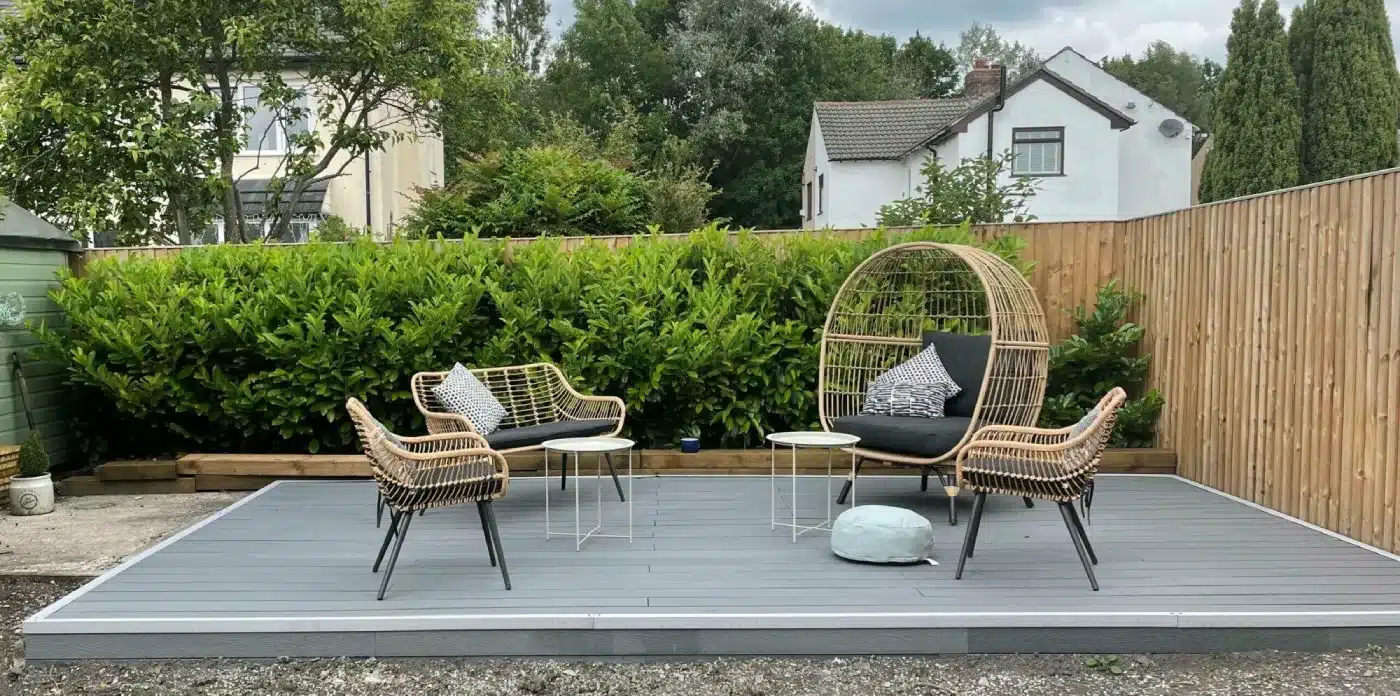
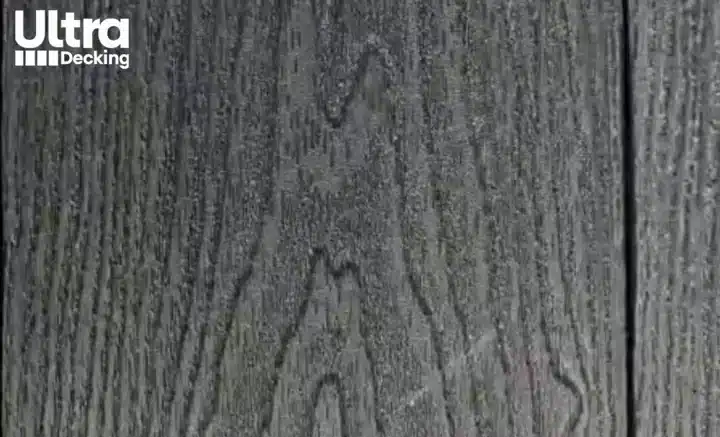
Scratch resistance is a major factor to be considered when researching durbable composite decking boards for your project. Buying the most competitively priced composite board may initially be beneficial; however, if the board’s scratch resistance is low, the composite will be noticeably damaged in a short space of time, leaving an unsightly decking area.
With that being said, in time, all decking will eventually experience scratches, though some perform much better than others. In terms of material choices, composites are one of the most scratch-resistant (not scratchproof) materials available. However, composite decking still varies in terms of durability. So, which is the most scratch-resistant?
A common misconception is that “capped” composite decking is entirely scratchproof. The truth is, while capped boards resist minor scratches, dragging heavy furniture across the surface will still leave a mark.
When it comes to the scratch resistance of capped boards, performance relies heavily on the surface treatment and the thickness of the cap. In 90% of standard capped boards, the protective solid shield is about 5mm thick. While 10mm thicknesses have been developed and tested to improve scratch resistance, the increased material costs prevented them from reaching mainstream production.
Because of this cost barrier, the top manufacturers we team up with have shifted their focus away from thicker caps and moved their attention toward advanced PVC and ASA outer layers. This pivot not only improves scratch resistance but brings highly realistic, premium designs to the market that justify the investment. Ultimately, a board’s ability to resist scratches comes down to the quality of its surface treatment.
The impact of a high-quality surface treatment was recently proven when an independent trader tested various boards online via Facebook. Our Home Choice range came out on top—beating mainstream competitors—because of our upgraded surface treatment, which provides richer, longer-lasting colour while significantly improving physical scratch resistance.
First, you must get an idea of the types and generations of composite decking, as this plays a key role in establishing which board is right for you.
| Decking Type | Performance on Scratch Resistance | Ease of Scratch Removal |
|---|---|---|
| Uncapped Grooved | Good | Very Good |
| Uncapped Wood Grain | Best | Hard |
| Capped | Average | Good |
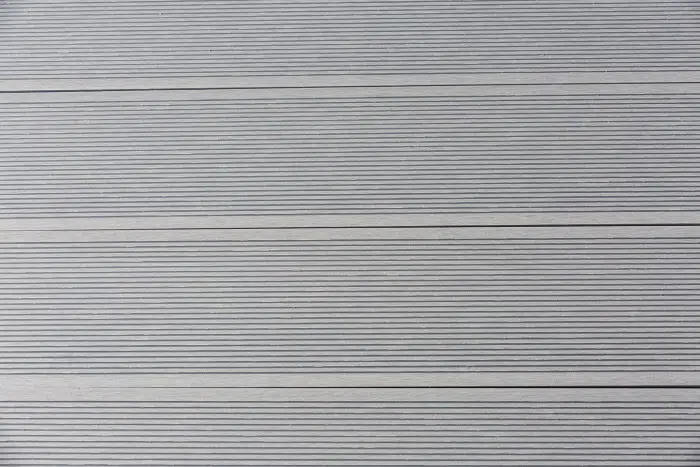
The grooved finish is a common profile and design in the market. Grooved boards are mostly first-generation composite decking, featuring a surface layer of wood fibres, powders, and HDPE plastic.
Truthfully, all composite decking will scratch if enough force is applied. Where this design shines is how easy it is to remove scratches.
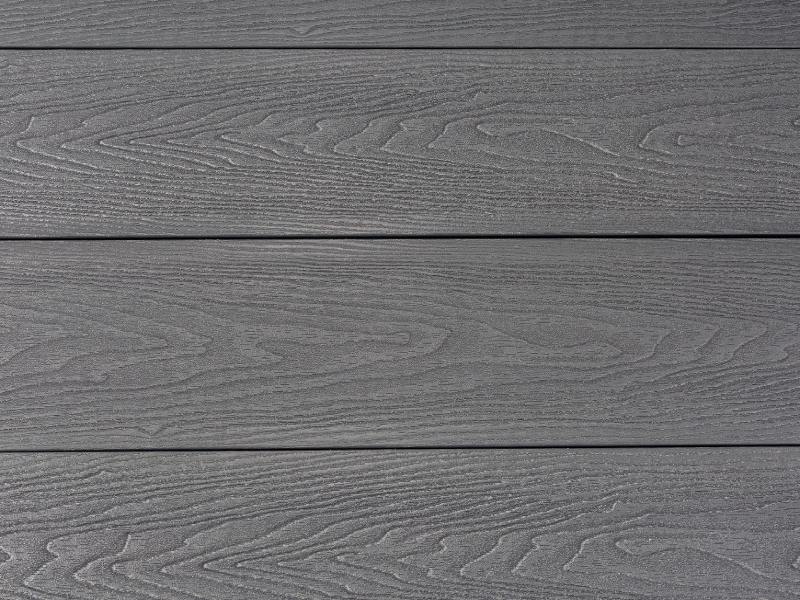
Wood grain composite boards are another popular profile, especially in hollow designs. However, not all composite decking is produced the same. Production techniques can dramatically change the colour, look, and performance
While standard wood grain isn’t always the best performer for scratch resistance, Ultra Decking’s Home Choice Premier Anthracite Grey was a winner as the best scratch-resistant product on the market. This is due to a specialized surface production technique. The best way to verify this is to run a simple home test on the samples you order.
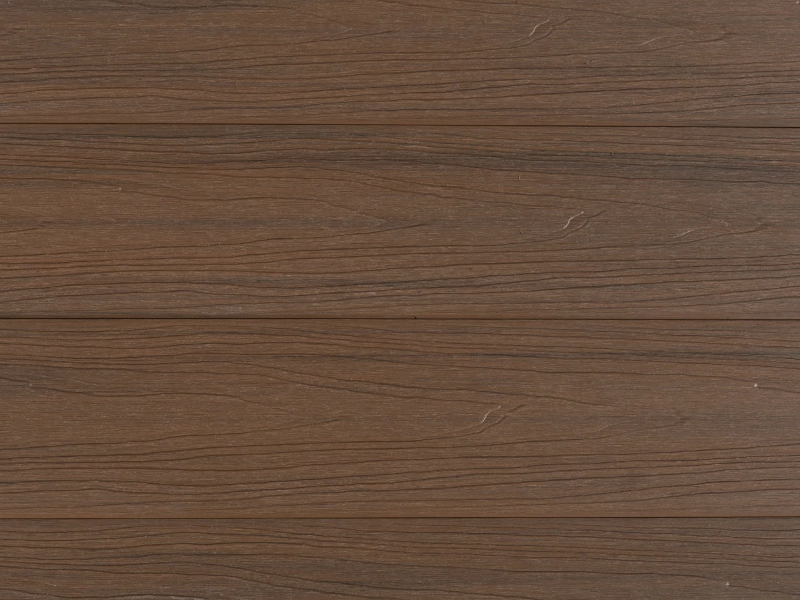
A second-generation board has a plastic, co-extrusion layer for protection, and usually comes in a wood grain finish. Although it doesn’t scratch as easily as some entry-level options, it will scratch if force is applied.
In all honesty, if scratch resistance is critically important to your project, standard capped or second-generation boards might not be your best option. Advanced PVC and ASA boards are superior in this category, provided you can justify the increased cost. However, we highly recommend ordering a standard capped sample first to test at home. You may find it perfectly meets your needs, allowing you to benefit from its fade resistance, stain protection, and ultra-low maintenance at a significantly reduced cost compared to full PVC or ASA.
If the worst happens and your deck does get marked, the repair process depends entirely on the type of board you purchased:
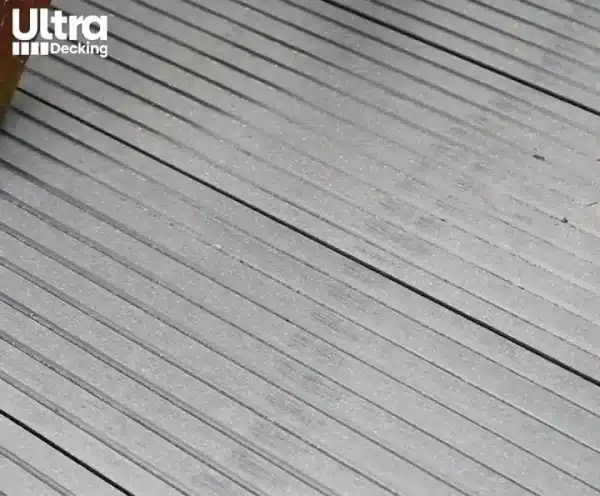


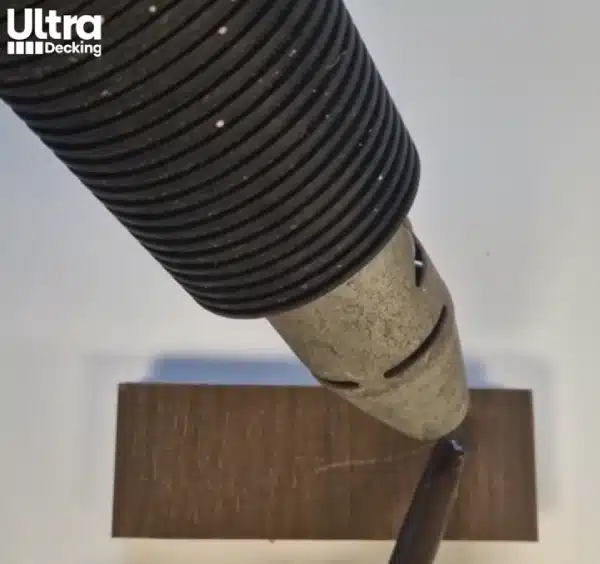
Warning: You must be extremely careful. Applying too much heat can warp the plastic cap, cause permanent damage, and potentially void your warranty. However, when done carefully, it does work well to minimise the flaw at the start. In the video simulating real world setting in our boiling test the scratches do come back in time, but we record no noticeable crack or issue to the capping in our tested board, which some providers advise off.
When looking for the best scratch-resistant decking, many homeowners turn to different brands and reviews. An excellent way to find durable composite decking is by going through people’s comments in online communities. Be sure to check reviews from a brand on different customer rating platforms to gain an accurate overall rating, utilising non-affiliated websites such as Feefo. Always ask for a few free samples to test the ratings yourself.
Good quality composite decking suppliers offer highly scratch-resistant boards. Don’t let the initial cost be the only deciding factor. Some quality brands offer high-quality, scratch-resistant decking without breaking the bank. Our very own Home Choice Anthracite Grey has been tested and rated the best for scratch resistance in the sector by independent fitters.
Naturally, selecting the best materials and taking preventative care can significantly reduce scratching. Here are the most common causes:
To prevent scratches, use lighter outdoor furniture or attach protective carpet pads to the legs of heavier pieces. Proper maintenance also goes a long way. For composite decking, a quick rinse and wash with non-abrasive cleaners will usually do the job. Regular cleaning is essential for your deck to retain its appearance and prolong its lifespan.
Even though our Home Choice Premier is exceptionally good for scratch resistance within the standard composite sector, we want to be completely transparent: all composite decking can be scratched. While it was launched and praised for its scratch resistance, when compared directly to advanced PVC and ASA materials, those premium options are honestly superior.
We highly recommend you compare and test samples of both in your own garden. This hands-on testing is the only way to ensure you get the absolute best product to withstand your family’s unique lifestyle.
 Previous Article
Fire-Resistant Composite Decking: UK Regulations & Ratings Explained

Can You Paint, Seal, or Stain Composite Decking?
