


 Previous Article
Is Composite Decking Scratch Resistance and which is the best?
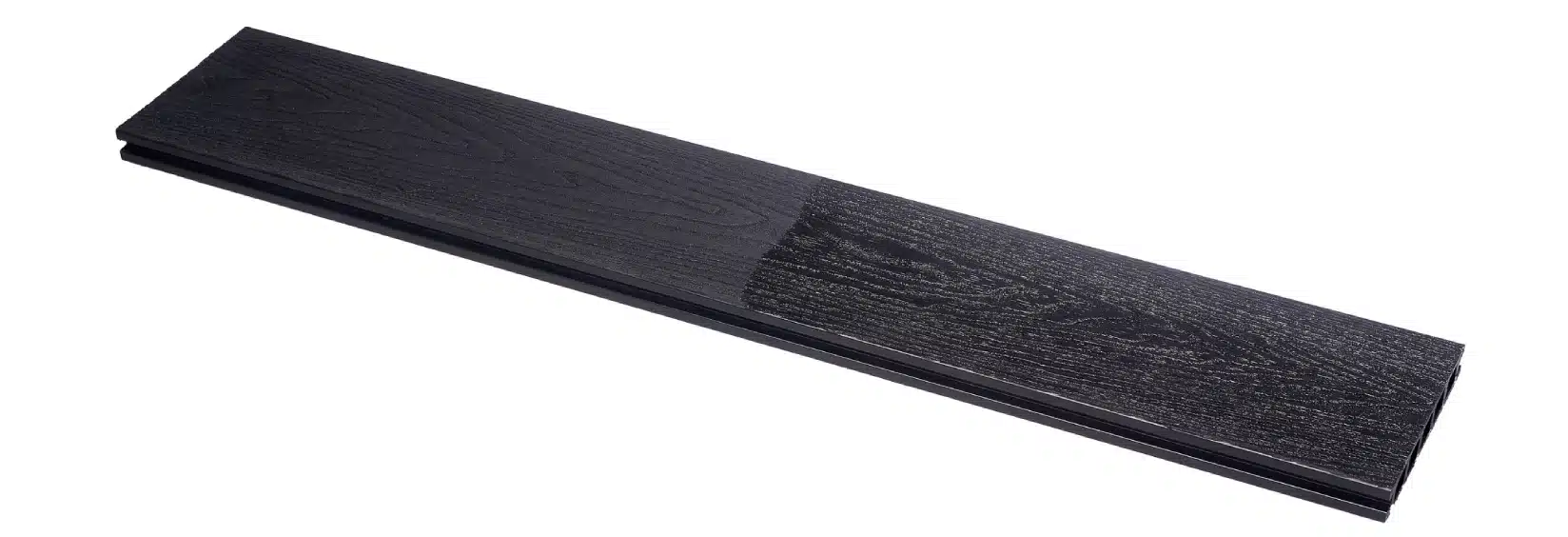
The Short Answer: No. We do not recommend it. > To provide a definitive answer, we conducted a long-term test on our uncapped composite boards. The results were clear: while it is technically possible to apply coatings, all paints, stains, and sealants began to peel and flake within 3 to 6 months, ruining the deck’s appearance. Read on to see our full test results.
There are countless articles online debating whether you can or should paint composite decking. But instead of just giving you an opinion, we decided to actually put it to the test ourselves. Why? Because our customers kept asking this question, and we wanted to watch exactly what happens over time so you don’t have to make an expensive mistake.
If your looking to purchase advanced composite decking, you might be asking: Why would anyone want to paint it when the main benefit is that it requires zero maintenance? Based on customer feedback, there are usually two reasons. First, homeowners with old, first-generation decking that has become worn and tired are looking for a way to revive it. Second, some customers love the rich initial colour of their brand-new boards so much that they want to apply a sealant to “lock it in.”
Before looking at our test results, we must make a vital distinction. This test focuses entirely on uncapped composite decking.
Why? Because modern capped boards feature a thin protective plastic (PE) layer that covers the entire board. This shield absorbs minimal moisture, which gives it incredible stain-resistant properties—meaning wine, beer, and grease simply wipe away. Because of this plastic shield, any sealant, stain, or paint you apply will not absorb at all. It will either wipe straight off or visually ruin the surface of the board.
The only type of composite boards that will physically take an applied stain or paint are uncapped boards, as they have an exposed wood-fibre surface.
So, knowing that uncapped boards can absorb liquids, let’s explore what actually happens after several months of weather exposure.
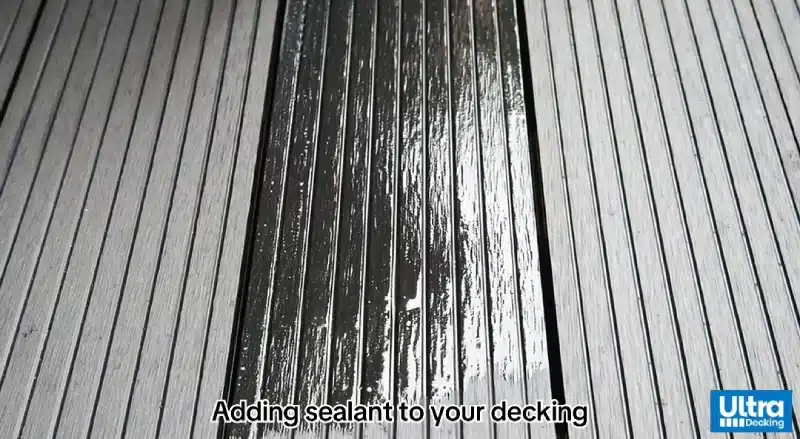
Sealants are traditionally used on wooden decks to protect against moisture. You might be considering a sealant to lock in your current colour or enhance moisture resistance.
A few years ago, we researched and tested this idea to see the true long-term effects. At first glance, it appeared to be a massive success.
The Verdict: While a sealant can be applied initially, the natural expansion and contraction of the composite will cause it to peel over time, leaving your decking looking visually unattractive and patchy.

Stains are mostly applied to wooden decks to change the colour or enhance UV resistance, so it makes sense that homeowners want to try this on faded uncapped composite decking. We stained a few boards, and initially, it worked exactly as we hoped.
The Verdict: We highly advise against staining. It is a temporary illusion that will create a permanent maintenance nightmare.
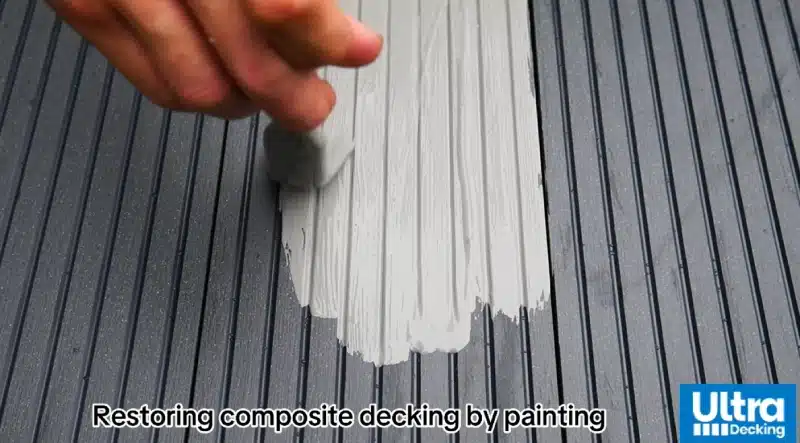
Painting is usually the last resort for homeowners trying to revive a heavily worn and tired deck. If paint works on timber, why not on uncapped wood-fibre boards?
To give the paint the best chance of survival, we even tested it using a high-quality primer.
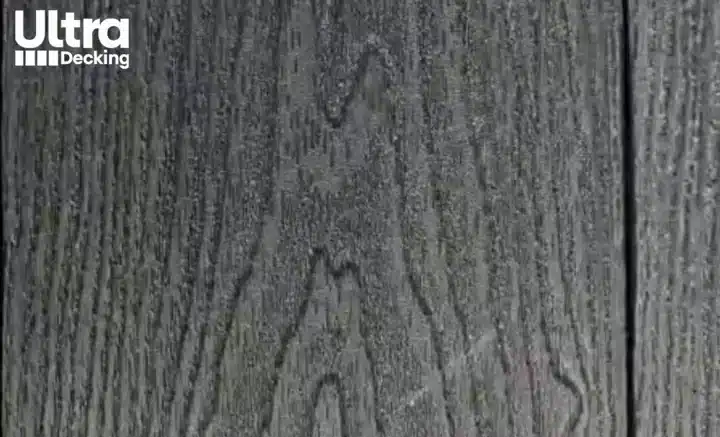
The Verdict: The results were the exact same across all three solutions. The boards will initially accept the paint, but within just a few months, the elements will cause it to aggressively peel and flake.
Yes, technically, you can paint, stain, or seal uncapped composite decking—but you absolutely shouldn’t.
These boards were specifically designed to be low maintenance without the need to never needed to be painted sealed or stained. Attempting to paint them defeats the purpose of the product and ultimately leaves you with a deck that looks worse than when you started, requiring endless scraping and re-painting.
 Previous Article
Is Composite Decking Scratch Resistance and which is the best?

Do You Need Planning Permission for Decking in the UK?
