


 Previous Article
Ultimate Guide to Maintaining & Cleaning Your Composite Decking
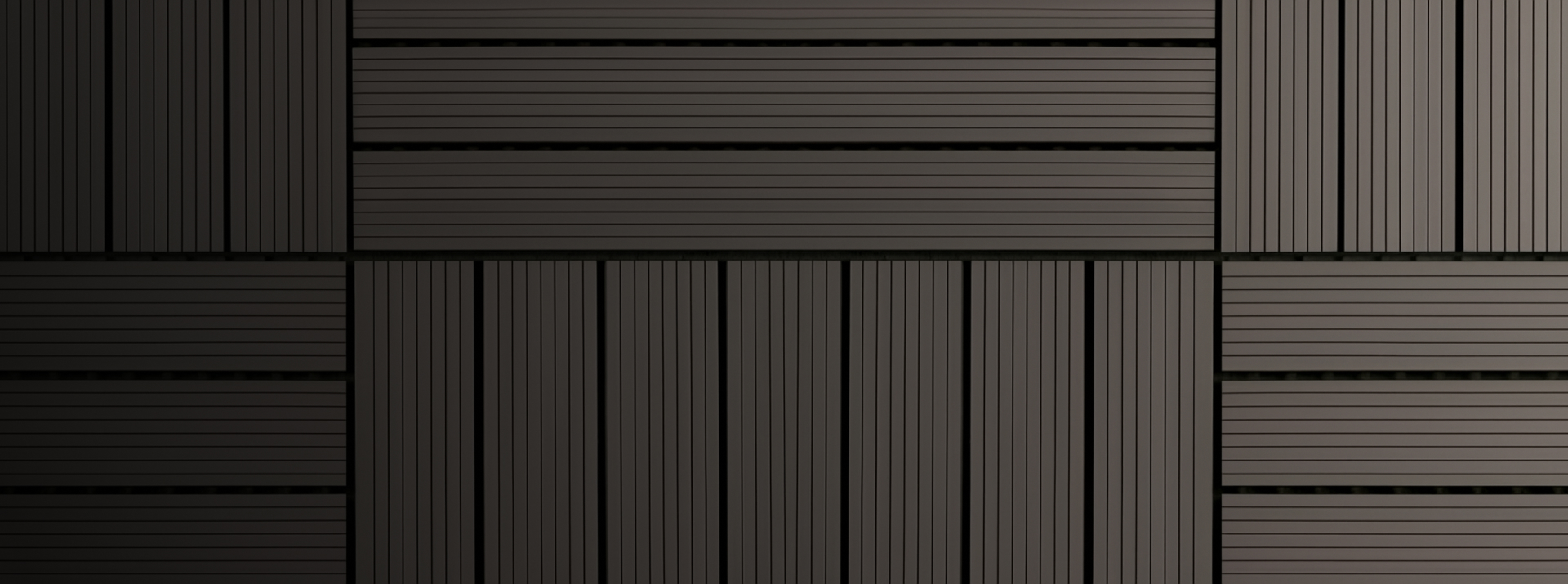
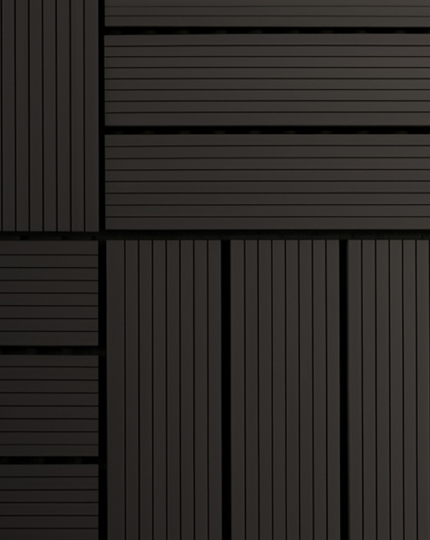
Thinking of Laying Decking Tiles on Grass?
While laying tiles on grass is a tempting “quick fix,” it creates a moisture trap that causes rot and structural instability. For a decking to last, you must transition from a “soft” lawn to a “solid” foundation using the methods outlined below.
A proper foundation is a crucial part of how to build your decking so that it lasts. In this article, we’ll walk you through the proper way to prepare your project area and suggest a list of methods to provide longevity to your project, rewarding your hard work.
Most decking tiles today are an easy installation and can be clipped to one another. Other varieties of decking tiles have specific instructions provided by the manufacturer to guide you through their installation, if you’re planning to install them yourself – be sure to read the manual first. But as far as decking tiles go, it’s very easy to install and can be done without any prior experience.
Installation of decking tiles might be easy, but this doesn’t mean you should skip the key fundamentals and place it directly onto your lawn. Placing any decking material (especially wood tiles) directly onto a soft surface like grass is not advisable for a long-term project.
Most soil in the UK is almost always damp; direct contact with wet grass or soil traps this moisture beneath the tiles. Most wood will swell due to moisture retention and then shrink when it dries; over time this will deteriorate the integrity of the wood – a major problem, as the wood will absorb the moisture, causing it to swell and rapidly break-down and rot.
Grass and topsoil are often soft and uneven; placing tiles directly on top will create an unstable surface that moves underfoot. Over time, the tiles will sink into the ground at varying and uneven rates, creating a wobbly and unsafe trip/slip hazard.
The lack of airflow space between the earth and the tiles creates a dark, damp environment – the perfect breeding ground for mould and mildew. It also makes the tiles highly susceptible to damage from insects living in the soil.
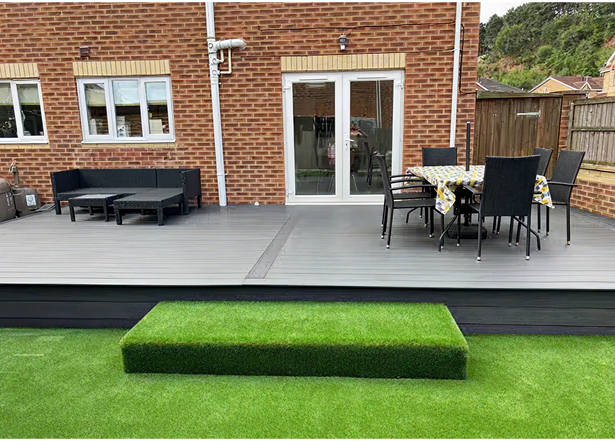
Expert Tip: Dark and damp environments increase the likelihood of unwanted fungal and weed growth in contained spaces. Due to the wood fibres in wood and composite tiles, humidity in enclosed spaces provides food sources via the wood and a beneficial environment to encourage the growth of these organisms, potentially leading to rot or invasive growth into your tiles.
To avoid these problems, you must create a stable, level, base with sufficient drainage provided. Here are the two best methods: –
This is the best DIY method for creating a new foundation.
Mark out the area, then dig out all grass and several inches of topsoil.
Lay a high-quality weed membrane over the bare earth.
Cover the membrane with a deep layer of gravel or MOT Type 1 Hardcore.
Use a tamper to compact the gravel down firmly until the entire area is flat and level.
To ensure a professional finish, you must install a fixed border around the entire perimeter using timber gravel boards or heavy-duty plastic edging.
Because decking tiles are lightweight and gravel acts as a “fluid” base, the tiles will naturally “drift” apart over time as they are walked upon. Without containment, the interlocking clips can snap and unsightly gaps will appear. A mandatory edging step locks the tiles into a tight, unified grid that cannot shift.
You can now safely lay your decking tiles on this solid, free-draining base, ensuring the outer tiles are pushed firmly against your edging for maximum stability.
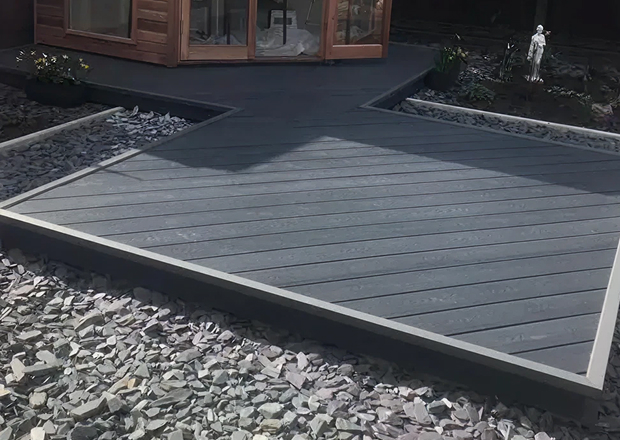
If you already have a solid concrete or paving slab patio, this is great news. You can lay decking tiles directly onto this base, but first you must check that it is in good condition with no major cracks and that water drains away from your house correctly.
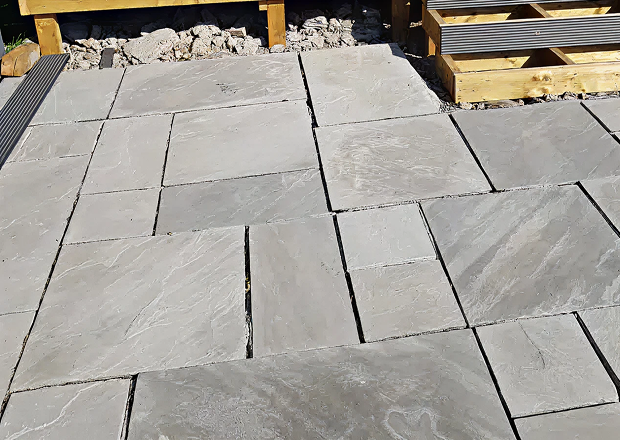
Our Warning: We do not recommend laying decking tiles on top of an old wooden deck. If the old boards are worn, the subframe beneath is likely already rotting. Covering it will trap moisture and accelerate the decay, creating a serious safety hazard. The only safe option is a full replacement of your old timber.
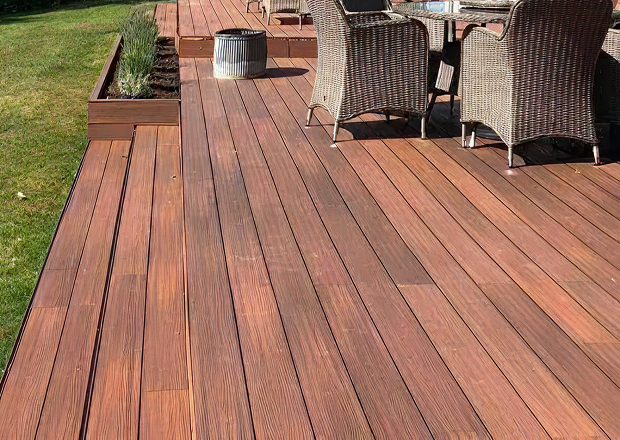
In most cases, decking tiles may be a quick solution for your garden—and for those looking for a short-term fix, they’re great.
Ready to upgrade your plan?
To prevent tiles from “drifting” or shifting apart, you must install a fixed perimeter edging. Using timber gravel boards or heavy-duty plastic edging strips creates a containment frame that keeps the interlocking clips secure and prevents gaps from forming as you walk on the surface.
Yes. Without a high-quality weed membrane, light and moisture reaching the soil will encourage weed growth between the gaps of your tiles. Once weeds take root in the gravel base, they are difficult to remove without lifting the entire installation.
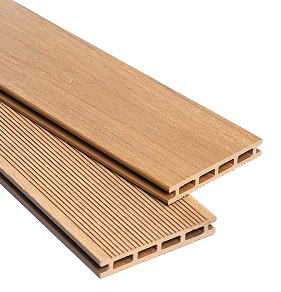
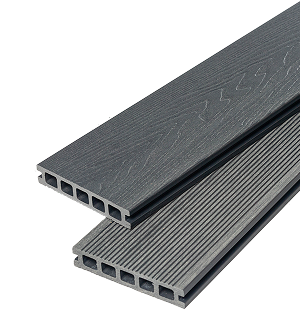
While decking tiles are a fantastic short-to-medium-term DIY solution (typically lasting 3–8 years depending on maintenance), full-length composite decking boards are an industrial-grade investment. When installed on a professional subframe, composite boards often last 25+ years with significantly less maintenance and superior structural safety.
 Previous Article
Ultimate Guide to Maintaining & Cleaning Your Composite Decking

Thinking of Covering Your Old Deck? This UK Expert Warning Could Save You £1000’s
