Previous Article
Should Decking Boards Be Installed Crown Up or Down? A UK Guide (2026)
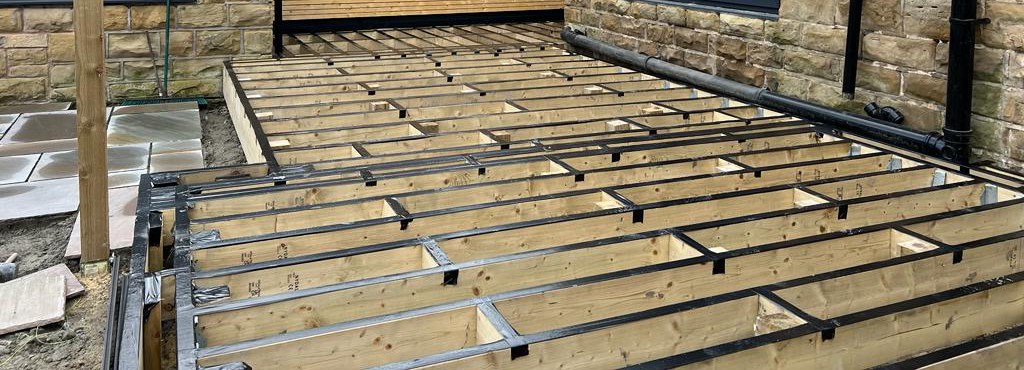
Installing new composite decking boards can be expensive and time-consuming, but replacing damaged and rotting joists is much more difficult. In many cases, you will need to build an entirely new frame. For this reason, it’s crucial to protect not only your deck boards but your subframe as well.
For wooden joists, water damage is one of the biggest problems, as it can cause rotting, warping, and mould growth. The question is, how can you protect your decking joists from moisture here in the UK? This guide provides the answers.
The best way to ensure a long-lasting subframe is to protect it from day one. Here are the key steps to take during the construction phase.
Choosing the correct materials for your joists is crucial. In most cases, you will want to use at least pressure-treated wood for your subframe, like UC4 (Use Class 4) rated timber, especially when in close or ground contact. You can also use non-wood alternatives such as plastic or composite joists. As much as possible, avoid using untreated wood unless it is naturally resistant, like Cedar or Redwood (these types of joists are specialist-sourced in the U.K.). To further increase your subframe’s moisture resistance, it’s advisable to add a breathable weed membrane and a layer of aggregate or gravel to prevent moisture build-up from the ground below your deck.
Ventilation is crucial when designing and building a deck right. Wood, the most commonly used material for joists, absorbs moisture. Without sufficient ventilation, it won’t release its water content properly, which can lead to rotting, warping, insect damage, and fungal growth. For better ventilation, you will need to observe proper spacing between your decking boards and ensure the joist spacing is correct. Raising your deck off the ground also helps with drainage and airflow.
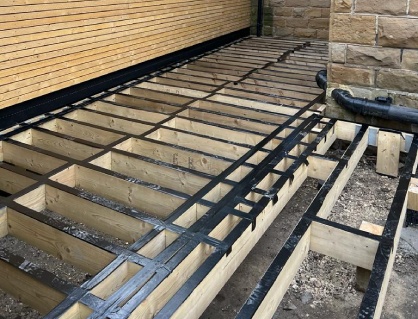
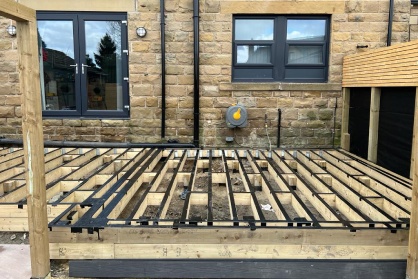
When building a new deck, you will want to flash, or waterproof, your joists. The most common way to do this is by using flashing tapes. The best to use is a self-sealing tape like butyl tape. These are considered a much better option as they seal tightly around decking fasteners.
A previous option was DPC tape. These water-resistant membranes are still an effective option, as they offer great moisture protection against water sitting on top of the joists. Alternatively, products simply branded as “Joist Tape” (which are usually butyl or bitumen-based) are exactly what you need for the job.
Another easy way to protect your decking joists is by using wood sealants. Applying a water-resistant sealant to cut or exposed areas adds a critical layer of defence. Since most joists are cut during installation, you often expose the untreated wood core; sealing these cuts ensures a long-lasting frame by preventing rot. It’s best to apply sealant to the subframe before installing the decking boards, as re-applying it later is much trickier.
Expert Note: For maximum protection, a great trade secret is using Tanking Paint (liquid rubber) on exposed or cut ends. Tanking paint creates a thick, waterproof barrier that far exceeds standard paint. This makes it ideal for posts and joist ends that sit near damp areas or are exposed to runoff water flowing through the deck gaps.
Once your deck is built, regular checks and simple maintenance will prevent moisture problems from developing over time.
To protect your joists, keep your decking surface as dry as possible. It’s best to wipe any liquid spills dry, as this protects not only your decking boards from stains but the joists below as well. You will also want to promptly remove any pooling water, fallen leaves, and plant or animal droppings. If you notice water pooling on your deck, it’s a clear sign that you may not have a sufficient gradient for water to run off.
Regularly checking and inspecting your subframe can save you time and money further down the road. Schedule regular inspections, if possible, not only on the decking surface but also on what’s beneath it. We understand it’s not always possible to do regular checks, so look for these signs of damage:
If you see any signs of damage, it’s best to replace the affected parts as soon as possible before the problem spreads.
Water drainage from other sources, especially a roof downspout, can cause significant water damage to your decking. Check for any drainage issues and fix them as soon as possible, redirecting drainage systems away from the decking. For areas with frequent rain, a roof over your decking can also help reduce water exposure.
Whether you have an existing deck or plan to build a new one, protecting your decking joists from moisture is crucial to ensuring your deck’s longevity, structural integrity, and safety. When building a new deck, use water-resistant materials, flash your joists, and allow for proper ventilation. Once built, remember to inspect and maintain your deck and redirect any downspouts or drainage away from the area.
Previous Article
Should Decking Boards Be Installed Crown Up or Down? A UK Guide (2026)
Composite Decking Price Guide