


 Previous Article
Is Composite Decking Slippery When Wet? A UK Expert's Guide
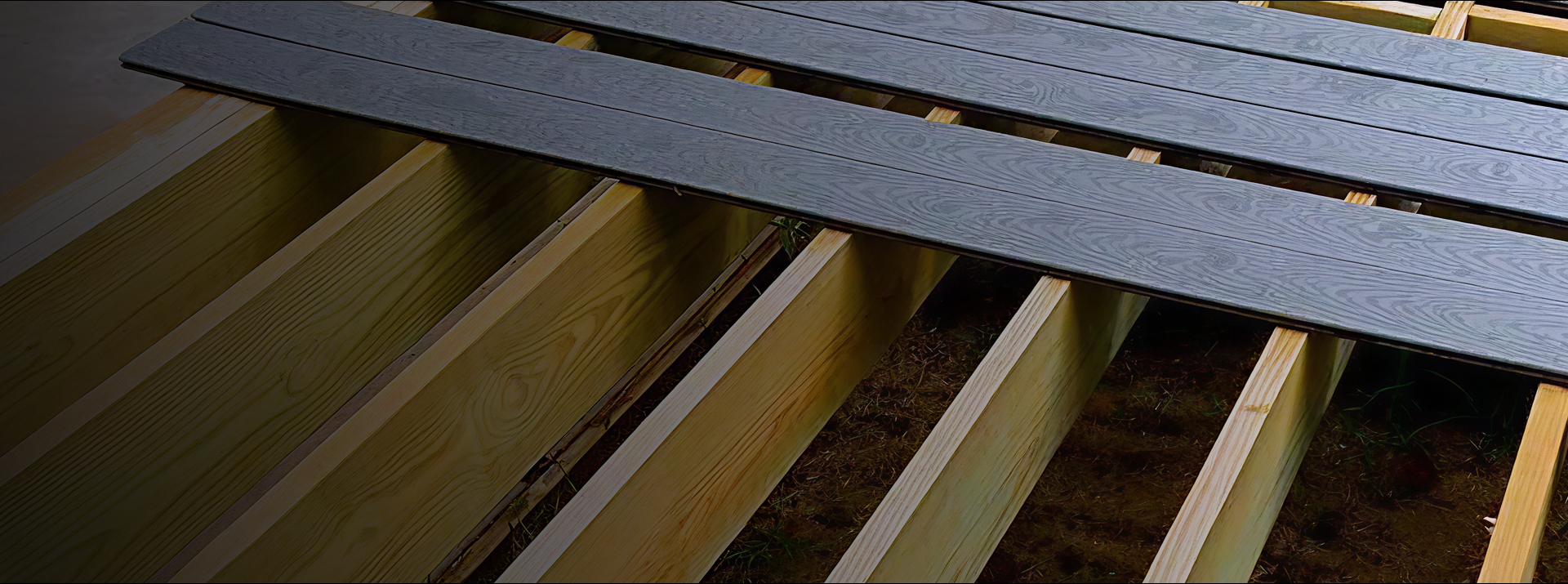
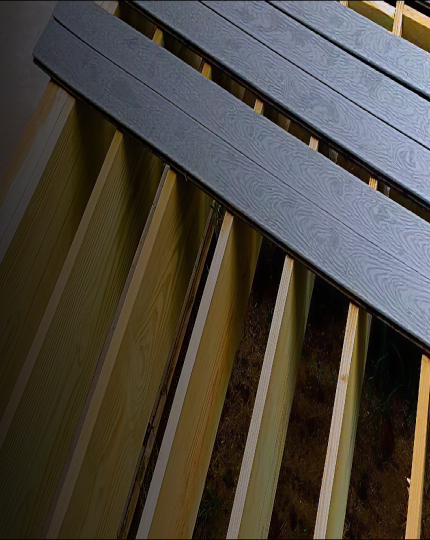
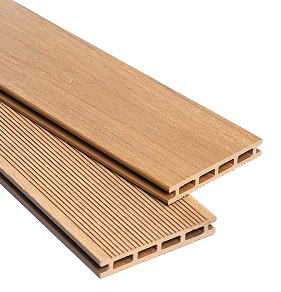
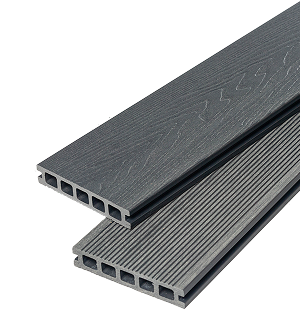
Building a decking subframe and choosing the correct materials is just as important as the composite decking boards you select for your project. Your subframe is the backbone of your new deck, and its quality determines the deck’s long-term structural integrity, safety, and lifespan.
On this page, we will walk you through everything you need to know: what makes a subframe so important, how to choose the best joist material for your needs, and the crucial rules for joist spacing to ensure your new deck lasts for decades.
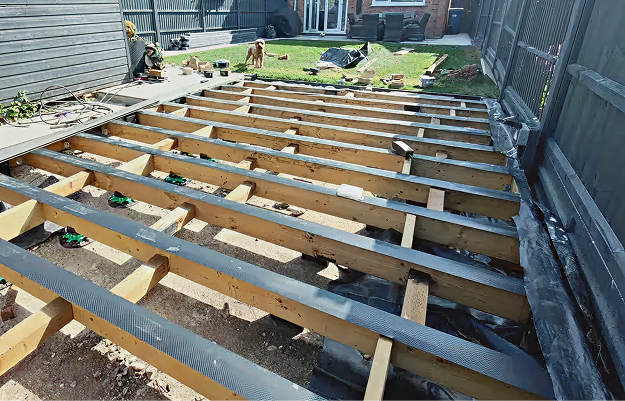

Safety should be the main priority when constructing any project that will see regular use by you and your family. It is essential to build a stable and durable subframe that will support your decking for years to come.
The process of building a solid substructure is crucial to the decking’s longevity. In fact, our expert view is that the frame’s strength is more important than the strength of the decking boards themselves. A beautiful deck on a weak frame is a failure waiting to happen.
| Material | Timber (C24) | Composite | Aluminium |
|---|---|---|---|
| Ease of Install | Excellent | Excellent | Good |
| Longevity | Good (10-15 years) | Excellent (25+ years) | Best (50+ years) |
| Price Point | £4-8 Pm | £8-14 Pm | £9-18 Pm |
| Best For | Budget-conscious projects under 15 years. | Ground-level decks & long-term performance. | Rooftop decks & ultimate fire resistance. |
One of the first considerations for safety and longevity is the material you use for your joist frame. You have three main options: traditional timber, modern composite, or high-performance aluminium. The best choice depends on your budget and how long you plan to be in your property.
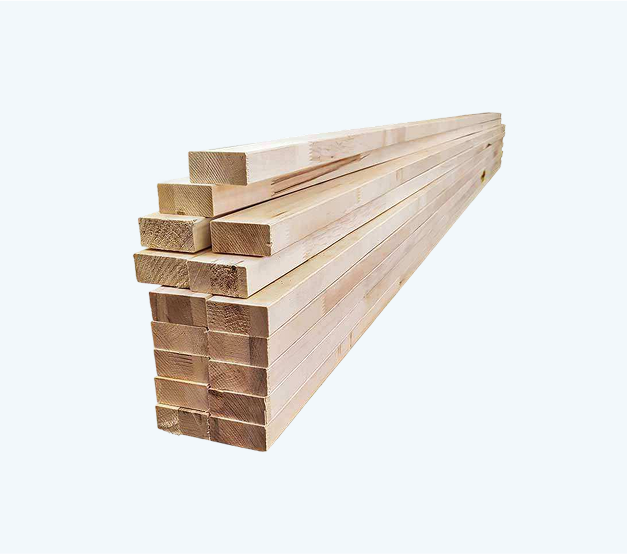
In our experience, timber joists are the most common material used for decking subframes, mainly due to their price. If you use good wood to build your decking joists, the decking will be structurally sound and not prone to collapse over time. A correctly installed timber subframe will last up to 10-15 years, making it a suitable choice if that aligns with your long-term plans for the property.
This is the most common and affordable choice, making it ideal for those on a smaller budget. The timber is infused with chemicals to make it resistant to rot and insects. While not as aesthetically pleasing as hardwood, it is versatile and easy to work with.
“UC4” refers to the level of treatment the wood has received. This timber is specifically treated for Ground Contact, meaning it can handle being wet for longer periods without rotting. If your deck frame is sitting directly on the ground or in a damp area, you should specifically request UC4 timber to extend the lifespan of your frame.
Expert Tip: Pressure-treated pine joists are readily available at any local timber or builders’ merchant. The main decking joist available here in the U.K. is… pressure treated softwood. We strongly recommend using C24 graded timber for any decking sub-structure to ensure the best long-term strength and durability.
Customer Note: Understanding C16 vs. C24 vs. UC4 When shopping for joists, you will see terms like C16 and C24. It is vital to understand the difference:
C16 (Standard): This is often cheaper timber used for internal stud walls. It can have more knots and may warp slightly.
C24 (Structural): This is a higher “Strength Grade”. It is cut from slower-grown trees, meaning it is denser, stronger, and straighter than C16.
Our Recommendation: Always ask for “C24 Graded, Pressure Treated Timber”. The small extra cost gives you a straighter frame and significantly better structural strength for decades.
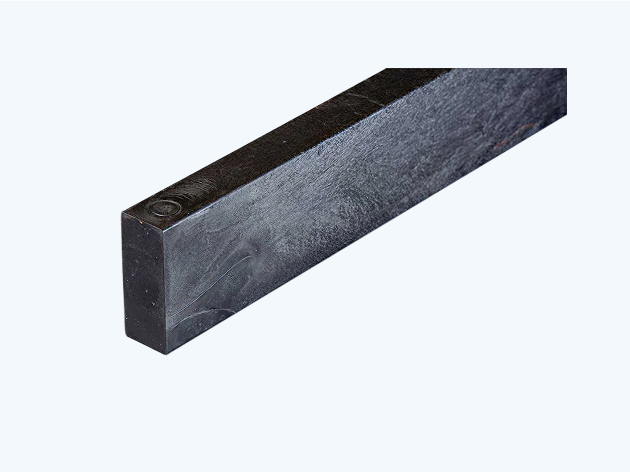
Composite joists are becoming increasingly popular for subframes, particularly for ground-level decks. Imagine never having to worry about your subframe rotting, warping, or failing—this is what using composite joists enables. They are dense, durable, and offer minimal moisture absorption, meaning they can be installed lower to the ground than timber.
Please Note: Even though they are moisture resistant, it’s always best practice to pack and lift composite joists slightly off a solid base to improve drainage and airflow.
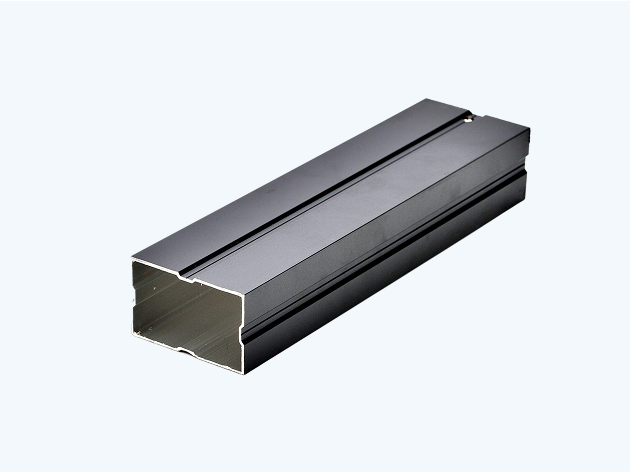
Aluminium joists are another “fit and forget” solution. They are lightweight, extremely strong, and offer Class A fire resistance, making them a great choice for rooftop terraces or commercial projects. Just like composite, they won’t rot, rust, or splinter, making them perfect for ground-level decks where raising the frame is not possible.
Top Tip: Most aluminium joists have an extra “Thermosetting” coating. This layer helps insulate the metal against thermal expansion and further protects it against corrosion and wear.
Getting your joist spacing correct is a crucial part of how to build your decking right. Correct spacing prevents your decking boards from sagging, bouncing, or feeling springy underfoot. If the joists are placed too far apart, the boards will flex and sag over time. This not only looks unsightly but also compromises the structural integrity of your deck.
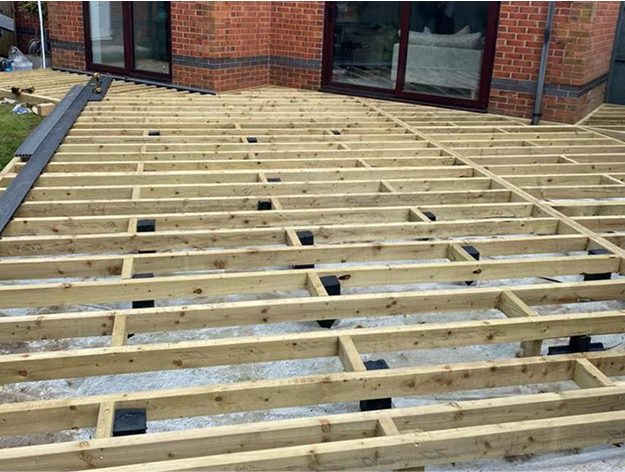
While different brands may have slightly different guidelines, our expert advice based on years of experience is simple:
The key takeaway from this guide is that your subframe is fundamental to the longevity and performance of your deck.
Choosing the right material for your needs and adhering to the correct 300mm joist spacing for composite decking are the two most important decisions you will make. To recap:
A great budget-friendly option for projects with a lifespan of 15 years or less.
Perfect for ground-level decks and for homeowners looking for long-lasting performance beyond 15 years
The ultimate choice for longevity and fire resistance, especially for commercial or rooftop projects.
 Previous Article
Is Composite Decking Slippery When Wet? A UK Expert's Guide

Hollow vs. Solid Composite Decking: A UK Expert's Guide (2026)
